Most Korean learners study one version of Korean. That version is standard Seoul Korean. But Korea has strong regional dialects. We call them 사투리 (sa-tu-ri — regional dialect or accent). Among all Korean dialects, the Busan accent may be the most famous. To a new ear, it can sound like another language. Honestly, even I struggle with it. When a Busan speaker talks fast, I often just guess from the feeling. Asking them to slow down does not always help.
What Makes Busan Korean Sound Different
The biggest difference is pitch. Seoul Korean is not a tonal language in the strict sense. But Busan Korean is part of the 경상도 사투리 (gyeong-sang-do sa-tu-ri — Gyeongsang Province dialect). It uses rising and falling tones in a way Seoul Korean does not. The same word can ride up or drop down.
Here is how I feel it. Take a borrowed word like “blueberry smoothie.” In Seoul, the pitch stays fairly flat. In Busan, it bounces around. The first part jumps up high. The middle comes fast. The ending slides down low. I cannot explain the exact rule. But the feeling is hard to miss.
Busan Words That Trip Up Seoul Koreans
Vocabulary is different too. Busan speakers use words that Seoul speakers may not catch at all. For example, 마이 (ma-i) means 많이 (ma-ni — a lot). So 마이 무라 (ma-i mu-ra) means “eat a lot.”
Some Busan phrases look like total nonsense on paper. A famous one is 가가 가가? (ga-ga ga-ga?). People often guess it means “Is that person going?” It does not. It actually means “Is that the same person we mean?” The single sound 가 does a different job each time. There is even an old Busan joke built on stacking 가 over and over.
Here is the real problem. Many of these words are hard even when written down. Without spacing, I sometimes cannot parse them myself. This is my personal experience. Other Koreans may see it differently. But I find these vocabulary gaps cause the most confusion.
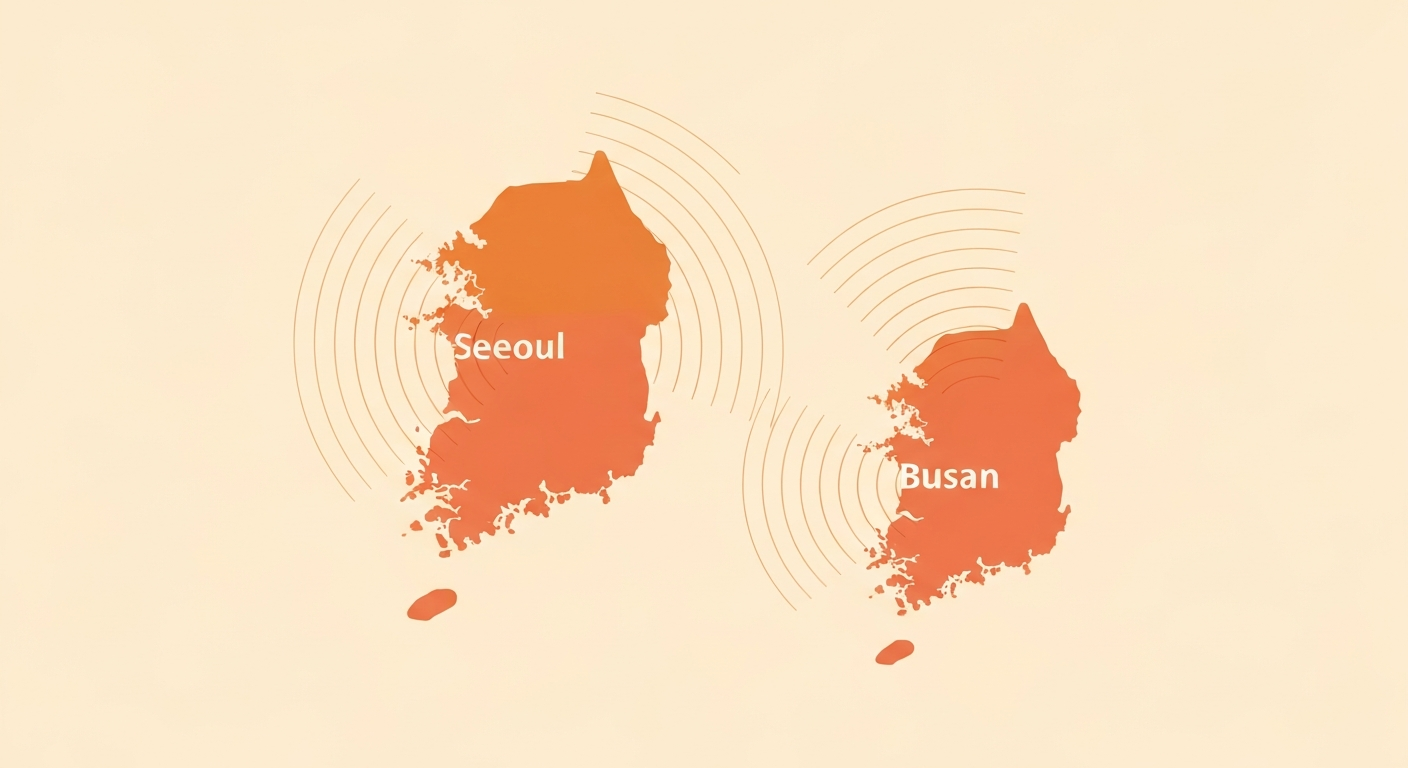
The Image of the Busan Accent
Seoul Koreans often have feelings about the accent. To me, the Busan accent sounds strong and direct. It feels like a person who says exactly what they mean. Some people find this refreshing. Others might find it blunt.
But there are two sides. The same accent can sound tough on a man. On a woman, many Seoul people find it cute. The word 오빠야 (o-ppa-ya — hey, oppa), said in Busan style, is a good example. Personally, I really like that sound.
You can hear this image in Korean film. The movie 친구 (chin-gu — “Friend”) made Busan speech famous on screen. The movie 바람 (ba-ram — “Wind”) shows it too, set in real Busan. Younger Koreans might see all of this differently.

Should You Learn Korean Dialects Like Busan?
So should you study Busan dialect? My honest answer: not at first. Learn standard Korean first. Even I cannot speak Busan dialect well. For a learner, standard plus dialect is a lot at once.
In my daily life, I rarely hear heavy Busan dialect. I mostly catch it on TV or YouTube. But knowing a few sounds and words still helps. If you watch Korean movies or visit Busan, you will meet it. A little recognition goes a long way. This is how I see it. Your Korean friends may have a different view.
Key Expressions
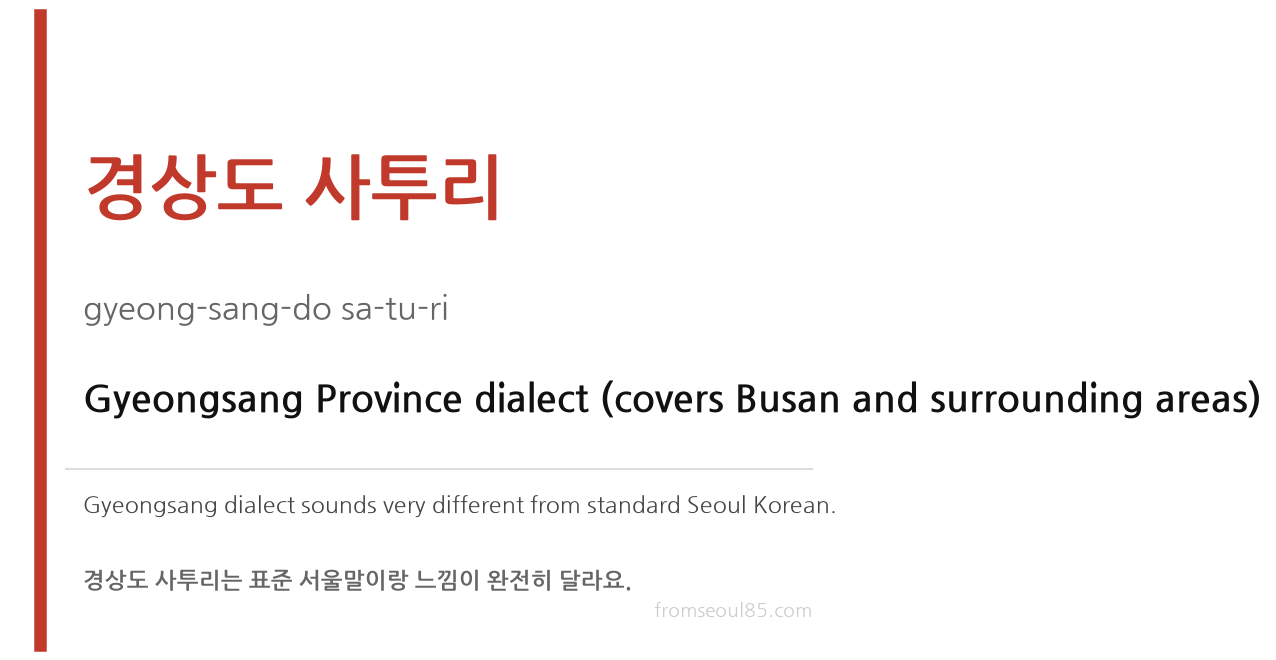
사투리 (sa-tu-ri — regional dialect or accent)
My friend from Busan has a strong sa-tu-ri that I can barely follow.
내 부산 친구는 사투리가 너무 강해서 잘 못 알아들을 때가 있어.
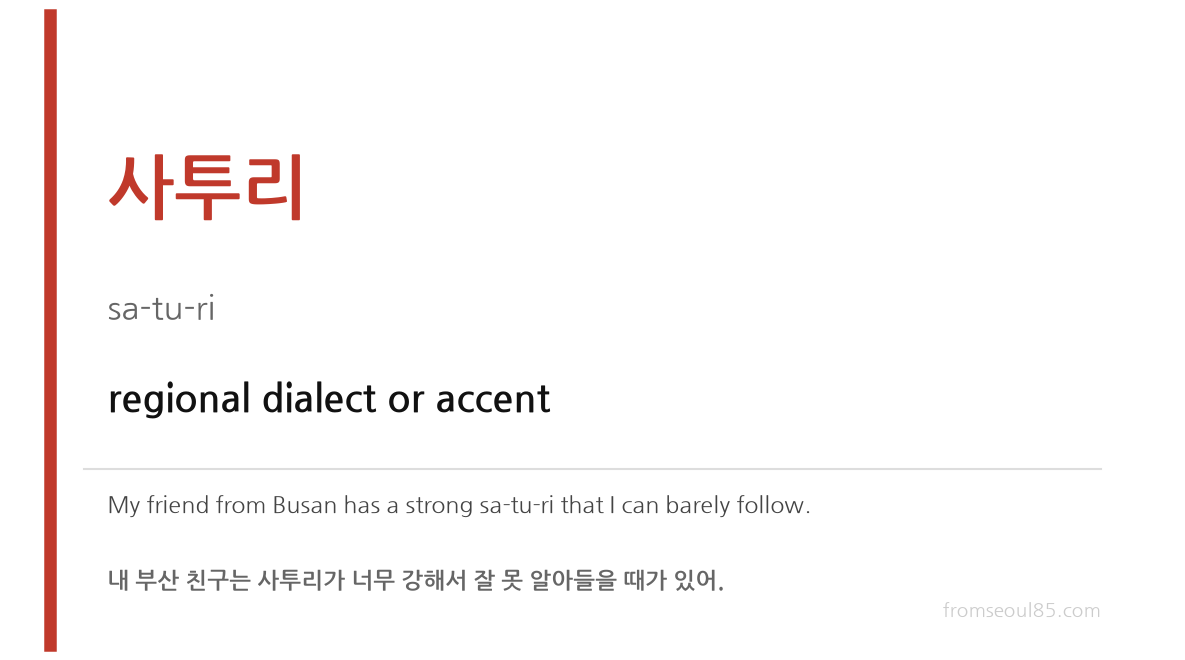
경상도 사투리 (gyeong-sang-do sa-tu-ri — Gyeongsang Province dialect, covering Busan and nearby areas)
Gyeongsang dialect sounds very different from standard Seoul Korean.
경상도 사투리는 표준 서울말이랑 느낌이 완전히 달라요.
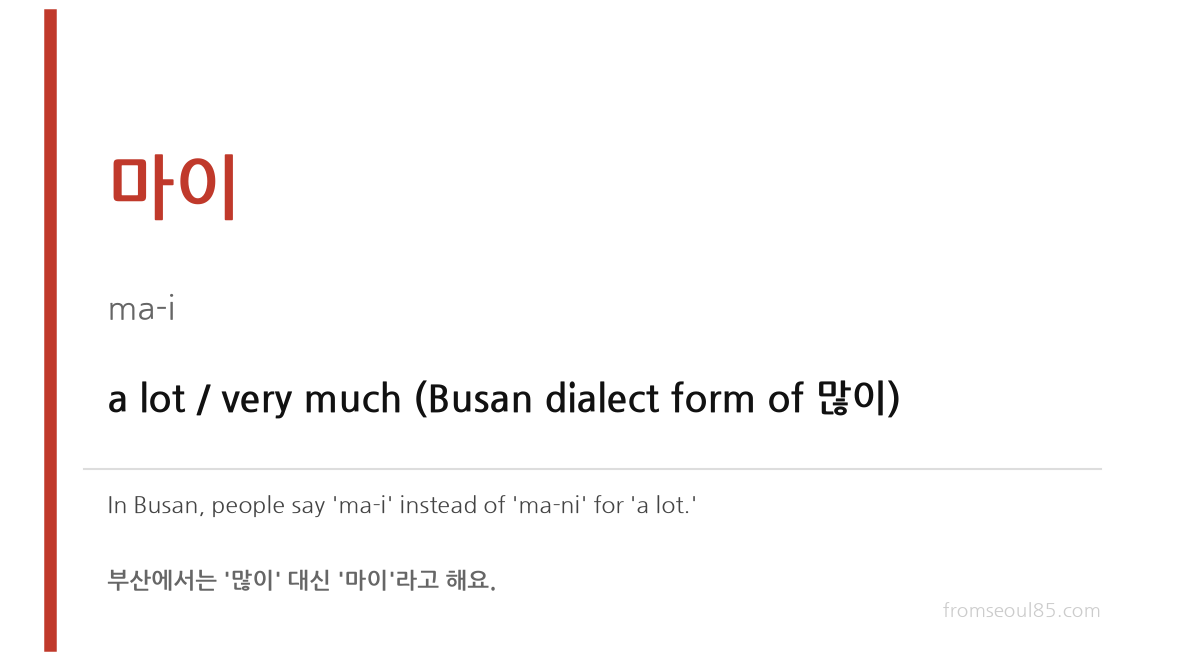
마이 (ma-i — a lot, the Busan form of 많이)
In Busan, people say “ma-i” instead of “ma-ni” for “a lot.”
부산에서는 ‘많이’ 대신 ‘마이’라고 해요.
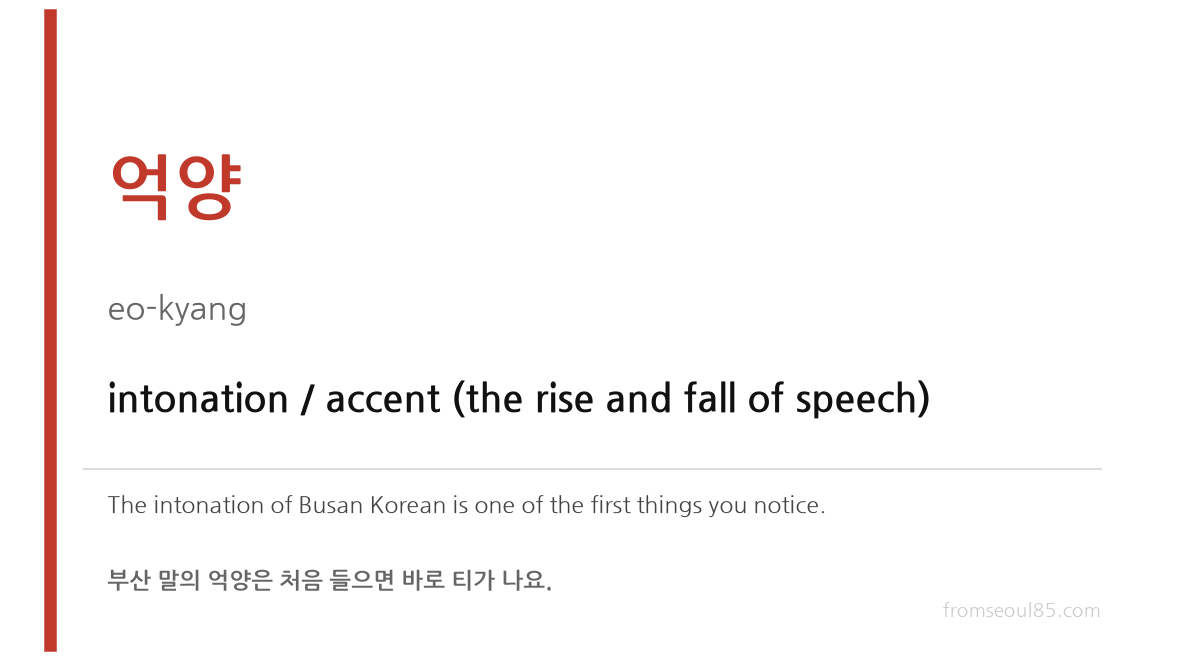
억양 (eo-gyang — intonation, the rise and fall of speech)
The intonation of Busan Korean is one of the first things you notice.
부산 말의 억양은 처음 들으면 바로 티가 나요.
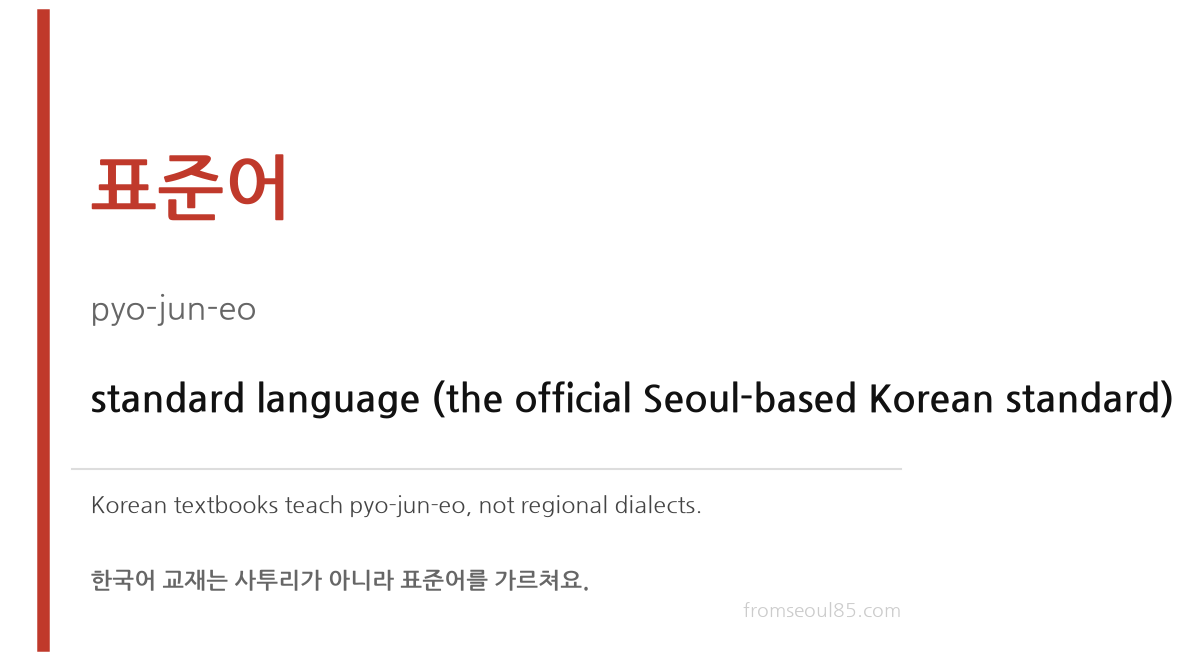
표준어 (pyo-jun-eo — standard language, the official Seoul-based Korean)
Korean textbooks teach pyo-jun-eo, not regional dialects.
한국어 교재는 사투리가 아니라 표준어를 가르쳐요.
Written by a native Korean speaker born in Seoul in 1985. This is my personal experience. Other Koreans may see things differently.