Some Korean phrases show up constantly in real conversation. You might not learn them in a textbook, but you hear them all the time. 생각보다 (saeng-gak-bo-da — more than I expected) is one of those phrases. It comes out when something surprises you — not in a dramatic way, just a small, everyday ‘huh, that’s different from what I thought.’ Personally, I catch myself using it a lot, usually on the good side — 생각보다 괜찮은데? (saeng-gak-bo-da gwaen-chan-eun-de — better than I expected). Once you notice it, you’ll hear it everywhere.
What 생각보다 (saenggakboda) means
The literal meaning is simple. 생각 (saeng-gak — thought/expectation) plus 보다 (bo-da — more than / compared to). So 생각보다 means ‘more than I thought’ or ‘compared to what I expected.’ But in real conversation, it is not always about something being bigger or better. It just means reality did not match the mental picture. It can go either way — better or worse.
In my experience, I lean toward the good side. But it really depends on my expectation. If I expected a lot, I might say 생각보다 별로다 (saeng-gak-bo-da byeol-lo-da — worse than I thought). If I expected little, I say 생각보다 좋다 (saeng-gak-bo-da jo-ta — better than I thought). The word just measures the gap from what I pictured.

How Koreans use 생각보다 every day
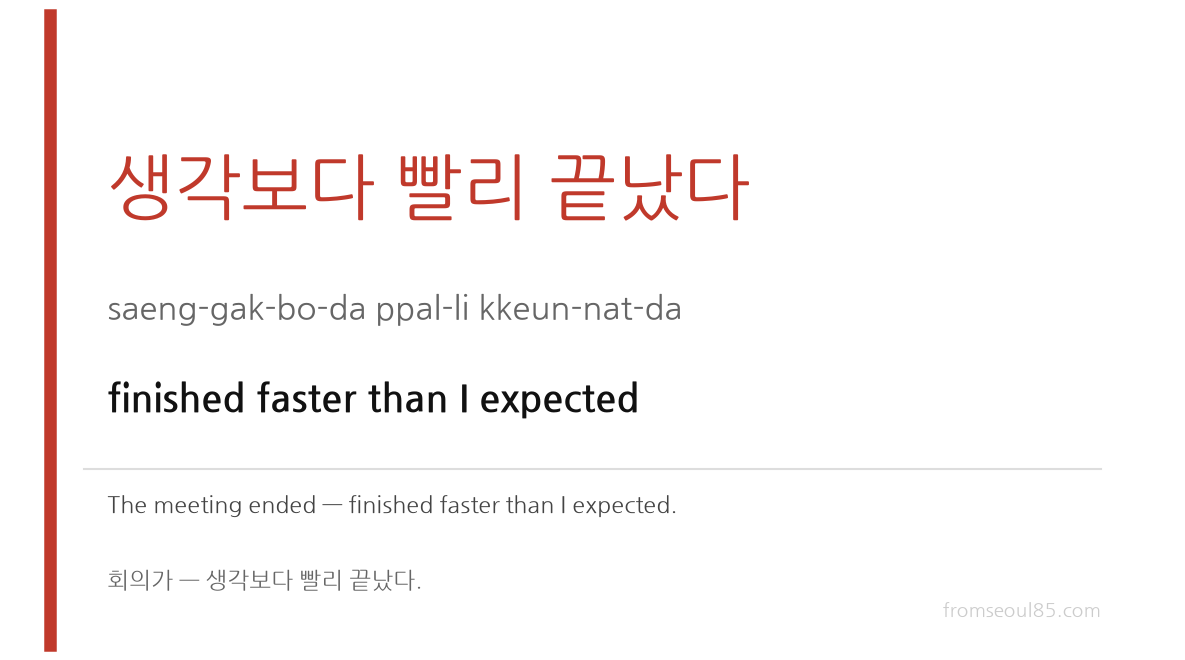
In everyday life, 생각보다 comes out almost automatically. This Monday is a good example. Lunch prices in Gangnam were high. I looked for something cheaper. I ended up at a staff cafeteria — 구내식당 (gu-nae-sik-dang — staff cafeteria). The food was better than the price. I turned to the person with me and said 생각보다 맛있는데요? (saeng-gak-bo-da ma-sin-neun-de — tastier than I expected). You see a movie ticket price — 생각보다 비싸네 (saeng-gak-bo-da bi-ssa-ne — more expensive than I thought). You finish a task early — 생각보다 빨리 끝났다 (saeng-gak-bo-da ppal-li kkeun-nat-da — finished faster than I expected). It fills that small gap between expectation and reality.
생각보다 as a soft way to react
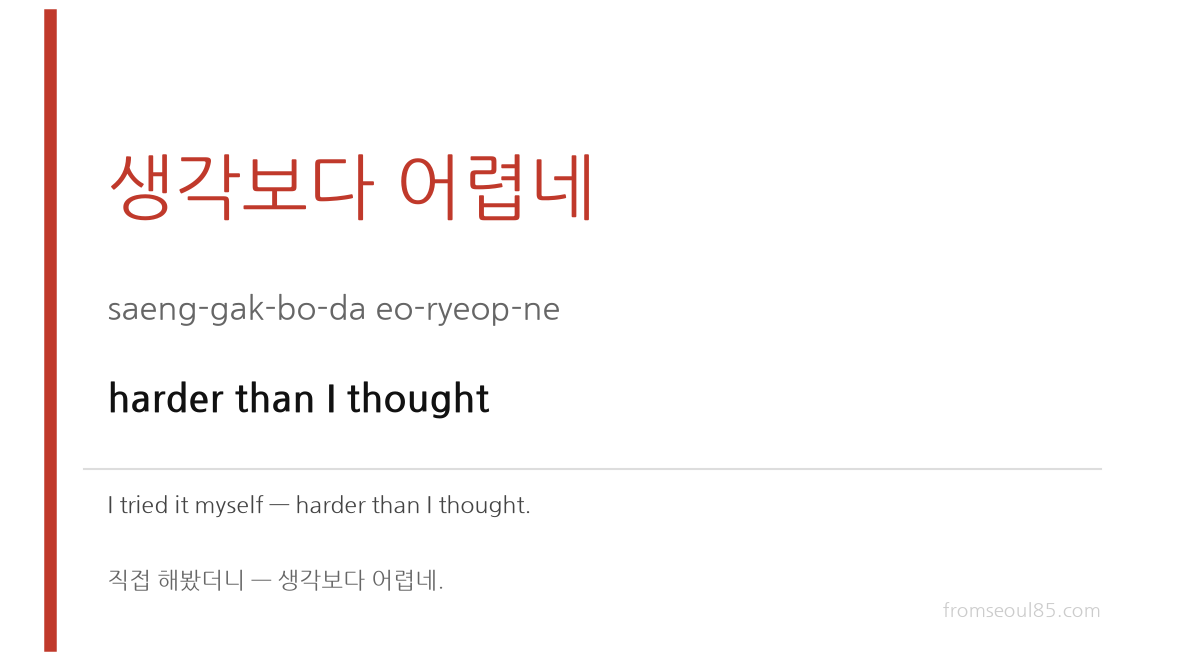
생각보다 can also make a comment sound softer. Instead of ‘this is hard,’ you say 생각보다 어렵네 (saeng-gak-bo-da eo-ryeop-ne — harder than I thought). It sounds less like a complaint and more like an honest note. But personally, I don’t pick it on purpose. The positive or negative just follows my own expectation. If it beats my standard, it comes out good. If it misses my standard, it comes out bad.

The nuance behind 생각보다
One thing to know: 생각보다 points to your own expectation. It is not a general judgment about the world. So it can sound humble, like a soft ‘I saw this differently.’ But I want to be honest. I don’t feel that on purpose. When something tastes bad, 생각보다 별론데? (saeng-gak-bo-da byeol-lon-de — worse than I expected) just comes out. There is no big moment of admitting I was wrong. This is my personal experience. Other Koreans may see it differently.
How to start using 생각보다
If you want to sound more natural in Korean, drop 생각보다 into your reactions. You do not need a big surprise. A price, a taste, a wait time works fine. Just add it before an adjective. For me it comes out automatically now. One more thing — 생각보다 맛있네 often points to good 가성비 (ga-seong-bi — value for money). It is a quick way to say something is worth the price. That is how real Korean expressions settle in. You just start using them.
Key Expressions
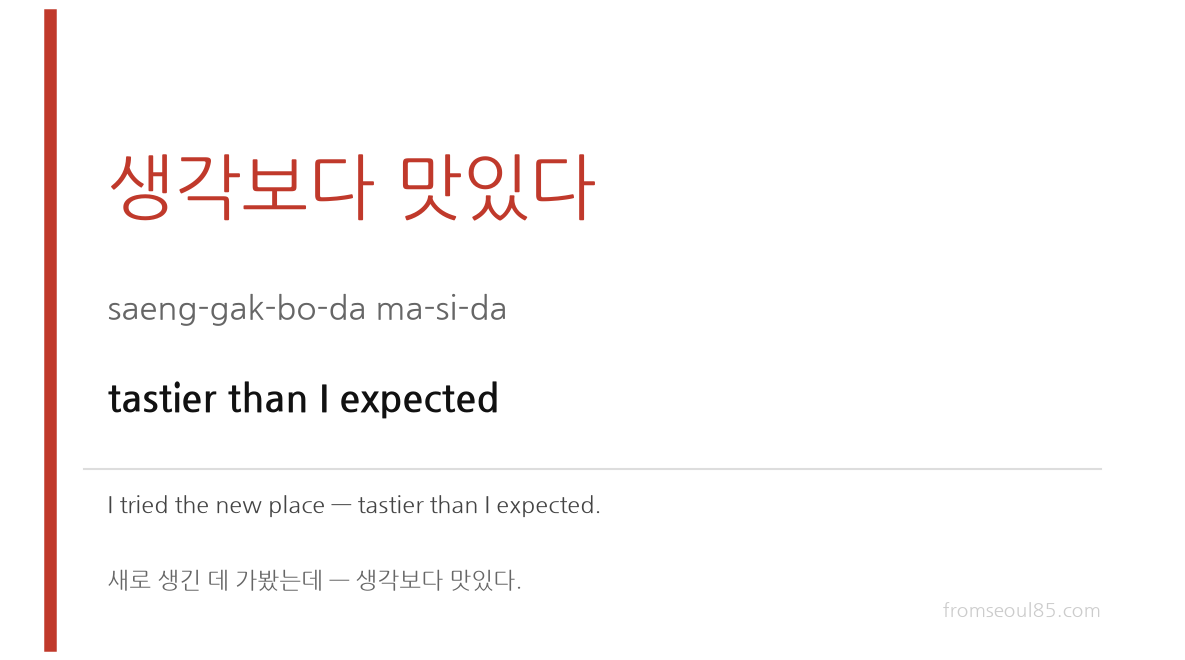
생각보다 맛있다 (saeng-gak-bo-da ma-si-da — tastier than I expected)
I tried the new place — tastier than I expected.
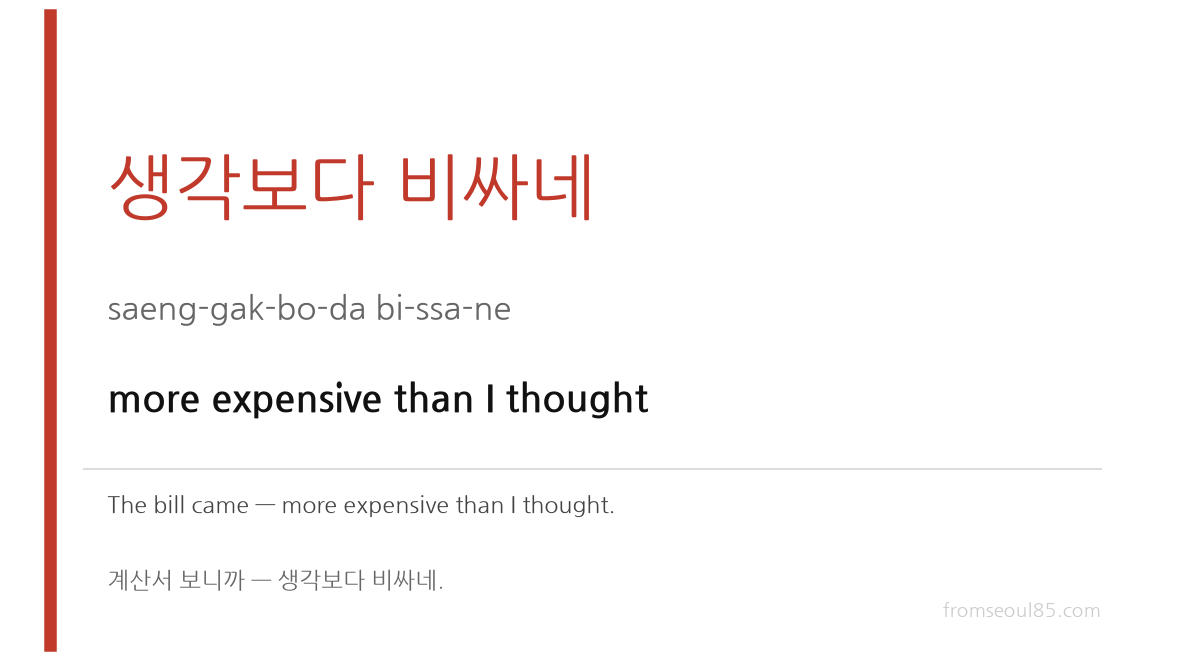
생각보다 비싸네 (saeng-gak-bo-da bi-ssa-ne — more expensive than I thought)
The bill came — more expensive than I thought.
생각보다 어렵네 (saeng-gak-bo-da eo-ryeop-ne — harder than I thought)
I tried it myself — harder than I thought.
생각보다 빨리 끝났다 (saeng-gak-bo-da ppal-li kkeun-nat-da — finished faster than I expected)
The meeting ended — finished faster than I expected.
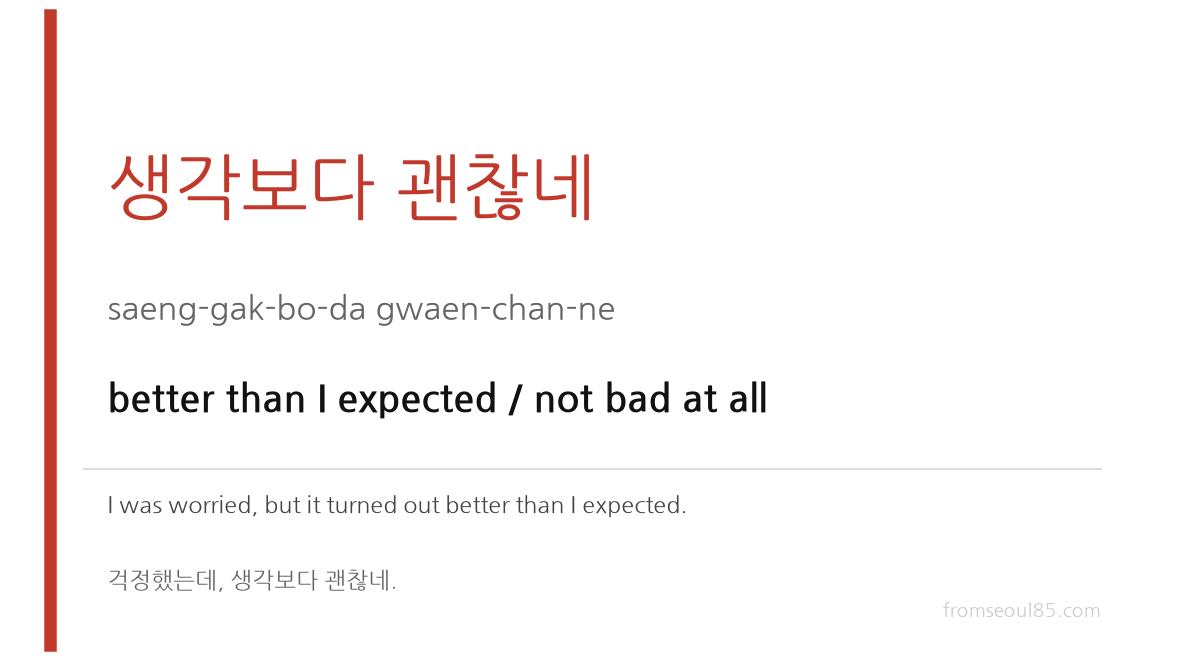
생각보다 괜찮네 (saeng-gak-bo-da gwaen-chan-ne — better than I expected / not bad at all)
I was worried, but it turned out better than I expected.
Written by a native Korean speaker born in Seoul in 1985. This is my personal experience. Other Koreans may see things differently.