If you have studied Korean for a while, you have met both 하다 (ha-da) and 되다 (dwe-da). To a learner, these two can look almost interchangeable. But to me, they feel like two different words. Understanding 되다 vs 하다 in Korean is less about grammar and more about feeling. Swap one for the other, and the whole sentence shifts. It comes down to who does the action. Is someone making it happen? Or is it just happening on its own?
The Core of 되다 vs 하다 in Korean
The simplest way I think about it is this. 하다 (ha-da) means you are doing something. It is an action you take yourself. 되다 (dwe-da) means something has become, or something is finished. Take 준비하다 (jun-bi-ha-da) and 준비되다 (jun-bi-dwe-da). For me, these are not close at all. 준비했어 (jun-bi-haess-eo) feels physical. It means I got something ready. Maybe I brought it, in case we needed it. But 준비됐어 (jun-bi-dwaess-eo) is a mindset. It means my mind is ready. One is about stuff. The other is about state.
How 됐다 Changes With Tone
Here is where 되다 gets interesting. 됐다 (dwaet-da) means something is already finished. Not in progress — done. When a plan works out, you say 됐다. It means ‘great’ or ‘it worked.’ But the same 됐어 (dwaess-eo) can also mean ‘that’s enough’ or ‘stop.’ So how do you tell them apart? Tone and face. In the second case, some words are dropped. The full thought is ‘stop, I don’t need it.’ But we only say 됐어. The missing part comes through in the tone and expression. Using 하다 here would feel strange. Nothing was a planned action. Something just wrapped up on its own.
결정이 됐어요: Reporting the Result
되다 (dwe-da) can also change the focus of a sentence. Look at how we answer questions at work. ‘Who decided this?’ — 제가 결정했어요 (je-ga gyeol-jeong-haess-eo-yo — I decided). ‘How did you decide?’ — 이렇게 결정했어요 (i-reo-ke gyeol-jeong-haess-eo-yo — we decided this way). But ‘When is it decided?’ — 결정이 됐어요 (gyeol-jeong-i dwaess-eo-yo — a decision has been made). For me, 결정했어요 describes the process. 결정이 됐어요 announces the result. It says the meeting is over, here is the outcome. You are just passing on the news. This is my personal experience. Other Koreans may see it differently.

이해하다 vs 이해되다: Don’t Overthink This One
Now let me be honest with you. Many guides make a big deal of 이해하다 (i-hae-ha-da) versus 이해되다 (i-hae-dwe-da). To me, they feel almost the same. Which one sounds better is personal. It shifts from person to person. For an explanation, I might say 설명이 이해돼요 (seol-myeong-i i-hae-dwae-yo — the explanation makes sense). For a feeling, I might say 기분을 이해해요 (gi-bun-eul i-hae-hae-yo — I get how you feel). But 이해됐어 works fine for feelings too. I would not lose sleep over this pair. Do not force yourself to split them.
My Honest Takeaway on 되다 vs 하다
So what is the real takeaway on 되다 vs 하다 in Korean? With 하다 (ha-da), you are the one acting. With 되다 (dwe-da), something is happening, and you go along with it. One is not more polite or more correct. It depends on what happened and how you frame it. But here is the honest part. I did not learn this from a book. It just felt natural, the way your own language does. There are far too many cases to memorize. It is like apples. I can explain an apple. But explaining every red and green one, and when each ripens? That is impossible. So my real advice is simple. Stop weighing 했다 (haess-da) against 됐다 (dwaet-da). Just listen, and just speak. Your gut will catch up faster than any rule.
Written by a native Korean speaker born in Seoul in 1985. This is my personal experience. Other Koreans may see things differently.
Key Expressions
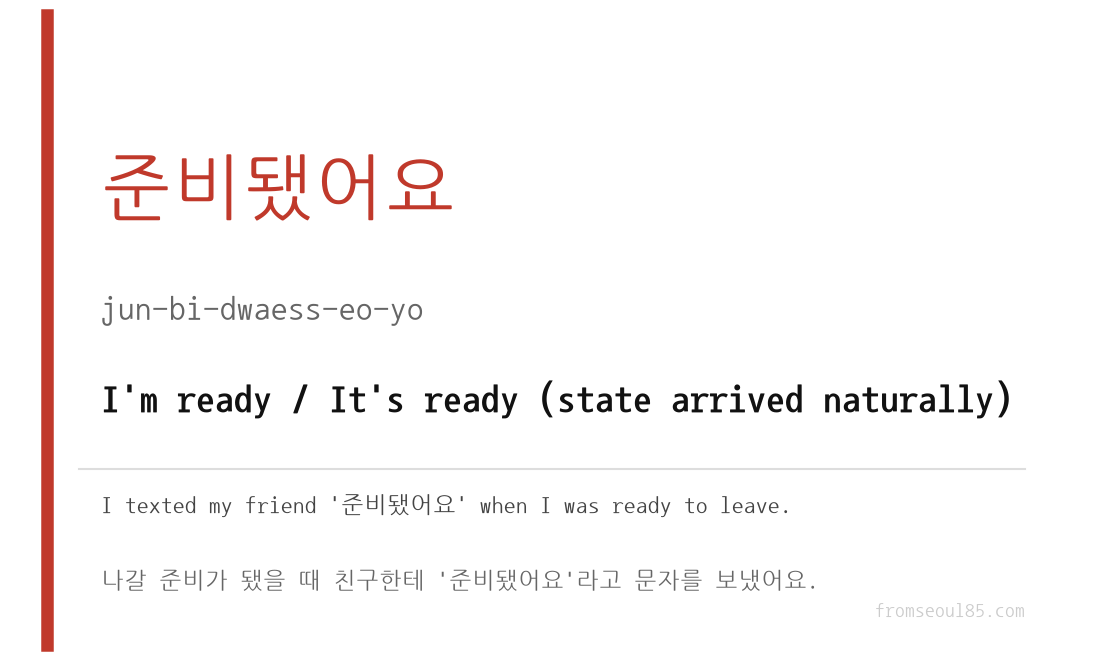
준비됐어요 (jun-bi-dwaess-eo-yo — I’m ready / it’s ready (the state has arrived))
I texted my friend ‘준비됐어요’ when I was ready to leave.
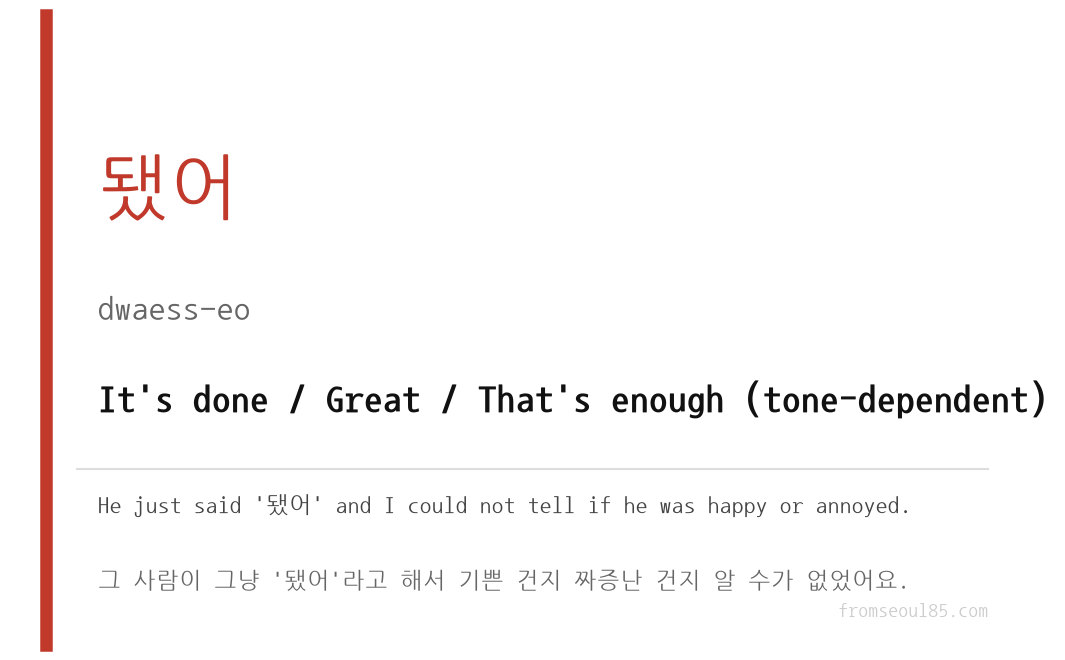
됐어 (dwaess-eo — It’s done / Great / That’s enough (tone decides))
He just said ‘됐어’ and I could not tell if he was happy or annoyed.
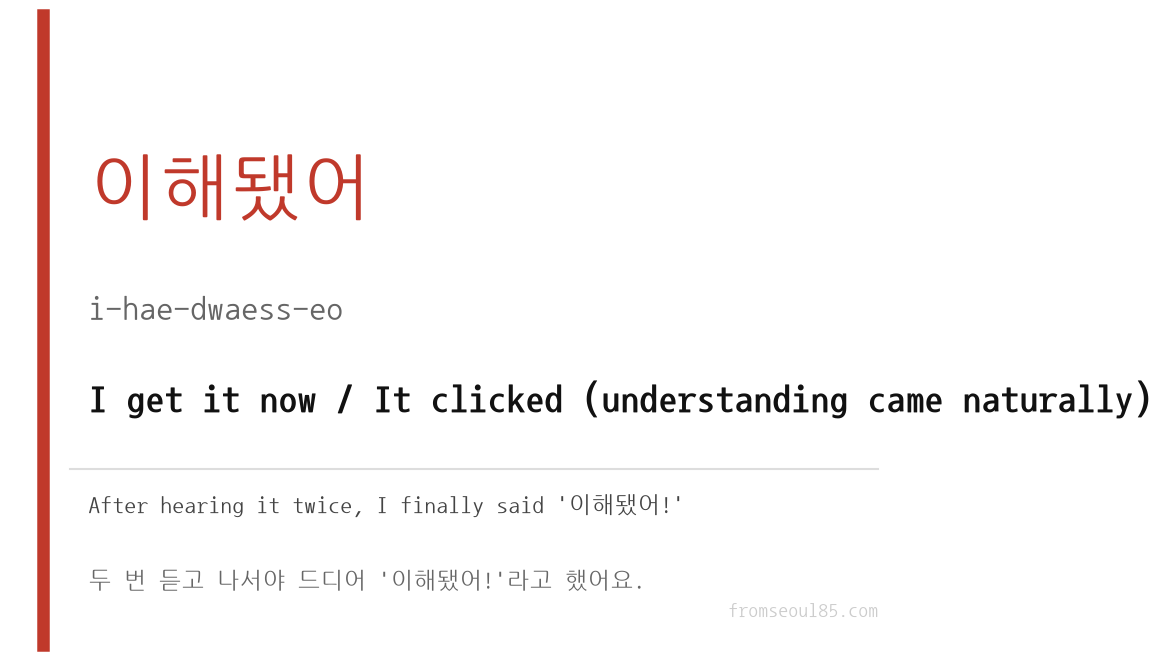
이해됐어 (i-hae-dwaess-eo — I get it now / it clicked)
After hearing it twice, I finally said ‘이해됐어!’
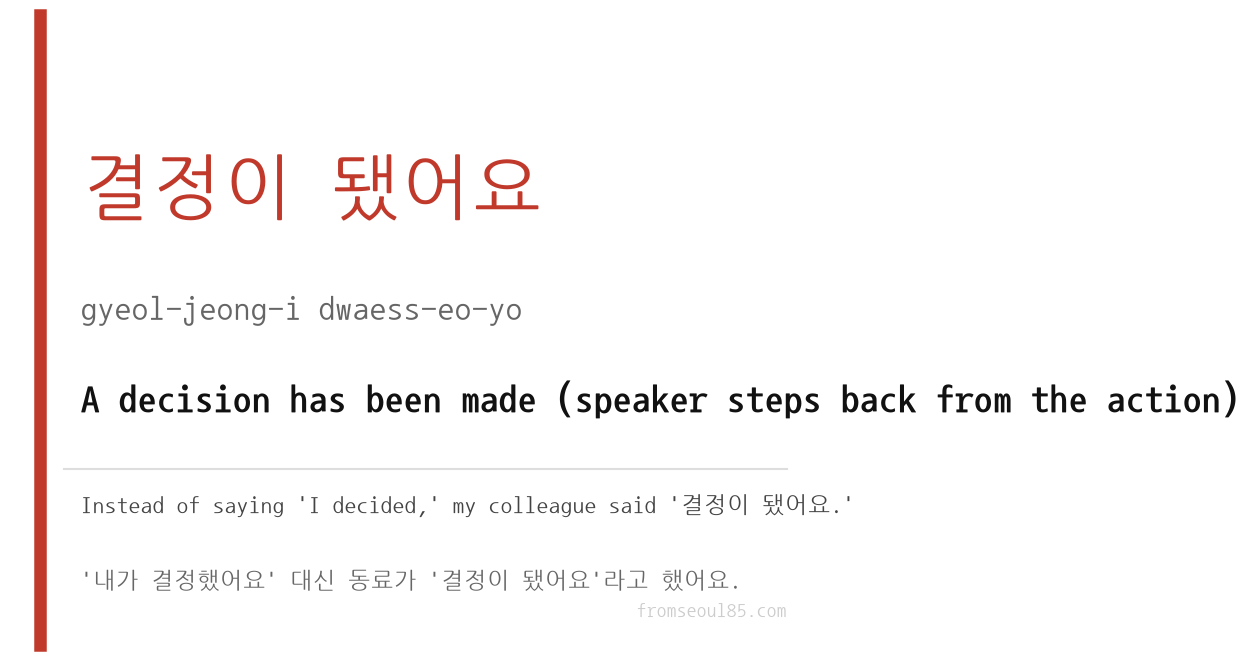
결정이 됐어요 (gyeol-jeong-i dwaess-eo-yo — A decision has been made (reporting the result))
Instead of saying ‘I decided,’ my colleague said ‘결정이 됐어요.’
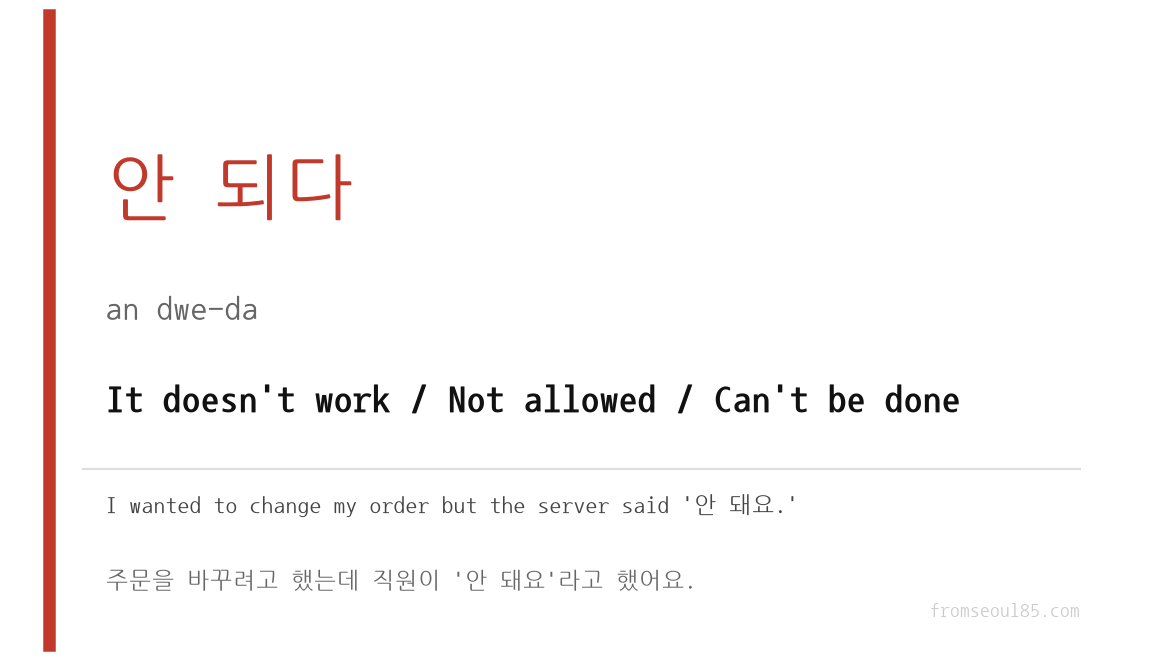
안 되다 (an dwe-da — It doesn’t work / not allowed / can’t be done)
I wanted to change my order but the server said ‘안 돼요.’