Most people stress about how to introduce yourself in Korean. Here is something that might help: most Koreans stress about it too. Ask a Korean to introduce themselves and you will get their name, age, maybe where they live, and 잘 부탁드립니다 (jal butakdeurimnida). That is about it. Short and simple is completely normal. So do not overthink this.
Koreans call self-introduction 자기소개 (jagi sogae — self-introduction). You do not need a long speech. A few honest sentences are more than enough.
저는 or 나는 — Which “I” Should You Use?
Korean has two words for “I.” 나 (na) is casual. 저 (jeo) is polite.
When you first meet someone, always use 저. It does not matter how young they look. It does not matter how young you are. The safest way to start is 저는 [name]이에요 (jeo-neun [name]-i-e-yo — I am [name]). This is polite and respectful. Even if the other person is clearly younger than you, starting with 저는 is still the right call.
나 is fine between school friends your own age. In that context you can say 나는 민준이야, 잘 지내보자 (na-neun Minjun-i-ya, jal ji-nae-bo-ja — I’m Minjun, let’s get along well). But in any adult or first-meeting situation, always start with 저. This is my personal experience. Other Koreans may see it differently.
Say Where You Are From — It Opens Conversations
After your name, say where you are from. Try 저는 [country] 사람이에요 (jeo-neun [country] sa-ra-mi-e-yo — I am from [country]).
This is more useful than it sounds. Personally, I am not great at keeping conversations going. I am a bit introverted. But sharing your nationality gives the other person something to respond to. They might say they have always wanted to visit your country. Or that they just got back from a trip there. Suddenly there is a real conversation happening — even with limited Korean. This is just me. Other Koreans may have a different approach.
Pronunciation: Take It One Syllable at a Time
저는 can look intimidating. It is not. Just break it down:
저 — jeo
는 — neun
___이에요 — ___-i-e-yo
Go slow. jeo-neun ___-i-e-yo. Say each syllable clearly before you try to connect them. Even harder sounds become manageable this way. 람 (ram) can become 라-암 if you need a moment. That is completely fine. No one expects you to sound perfect right away. Pronunciation gets better with repetition. Keep going.
Why Koreans Ask About Your Age and Job
Right after your name and country, a Korean might ask how old you are or what you do. This is not rude. It is practical.
Age matters in Korea because it shapes how people speak to each other. A Korean will quickly figure out whether you are 형 (hyeong — older brother, used by males), 누나 (nu-na — older sister, used by males), 오빠 (op-pa — older brother, used by females), 언니 (eon-ni — older sister, used by females), or 동생 (dong-saeng — younger sibling). Knowing this helps them know how to treat you. It is not about being nosy. It is about knowing where you stand with each other.
Job questions are usually just a conversation starter. When two people do not know each other well, profession is an easy topic to fill the silence. Think of it less as an interview and more as someone trying to find common ground.

잘 부탁드립니다 — More Than an Introduction Phrase
잘 부탁드립니다 (jal bu-tak-deu-rim-ni-da) is often translated as “please take care of me” or “I look forward to working with you.” Neither translation quite captures it.
Think of it like “please” in English. You attach it naturally in situations where you are asking for someone’s cooperation, help, or goodwill. Before a delivery driver leaves with your package: 잘 부탁드립니다. Before your wedding photographer starts: 잘 부탁드립니다. At the end of a job interview: 잘 부탁드립니다. It appears throughout daily life, not just in formal introductions.
It is not old-fashioned. It is a classic phrase that has not changed because it still works perfectly. In a casual friend setting you might say 잘 지내보자 (jal ji-nae-bo-ja — let’s stay in good touch) or 친해지고 싶다 (chin-hae-ji-go sip-da — I want to get close). Both feel warmer and more casual. But as a foreigner using 잘 부탁드립니다 after meeting someone new, no one will think it is strange. It is always appropriate.
One More Thing About Mistakes
You will make mistakes. This is normal. Korean and English are very different languages. Koreans know this. In my experience, the effort to try is what people actually remember — not the errors. A warm attitude with imperfect Korean goes further than perfect silence.
I am one Korean man. I cannot speak for everyone. But I will say this: if someone gives you a hard time for trying to speak Korean, they are the exception. Not the rule.
Key Expressions
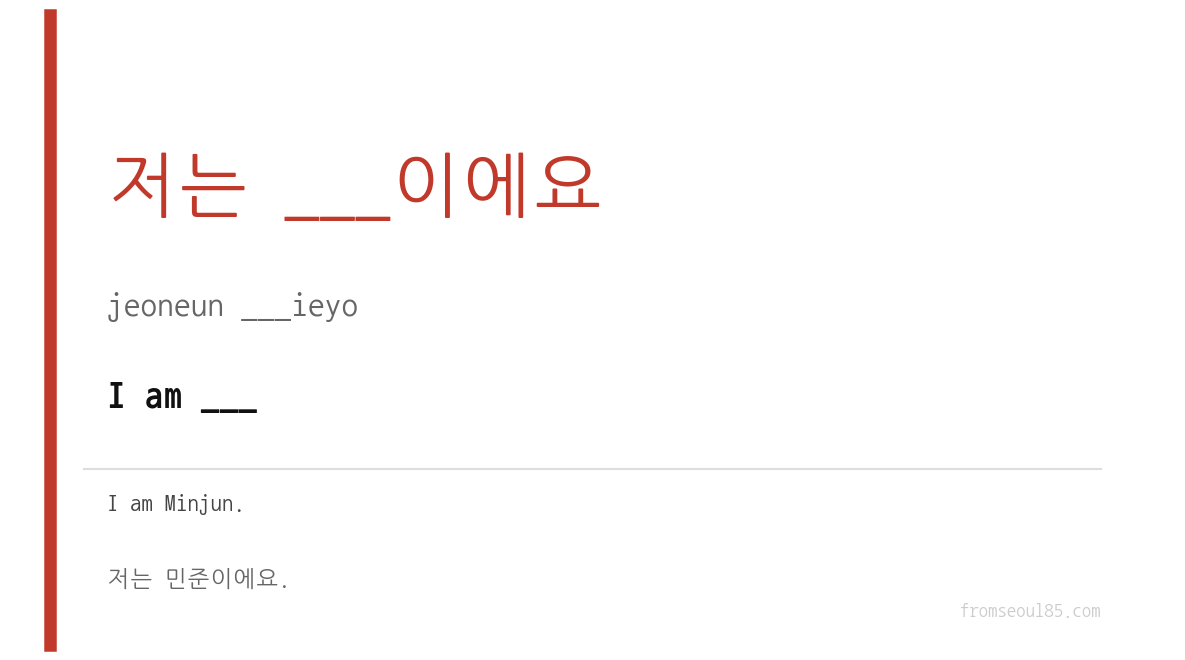
저는 ___이에요 (jeo-neun ___-i-e-yo — I am ___)
I am Minjun.
저는 민준이에요.
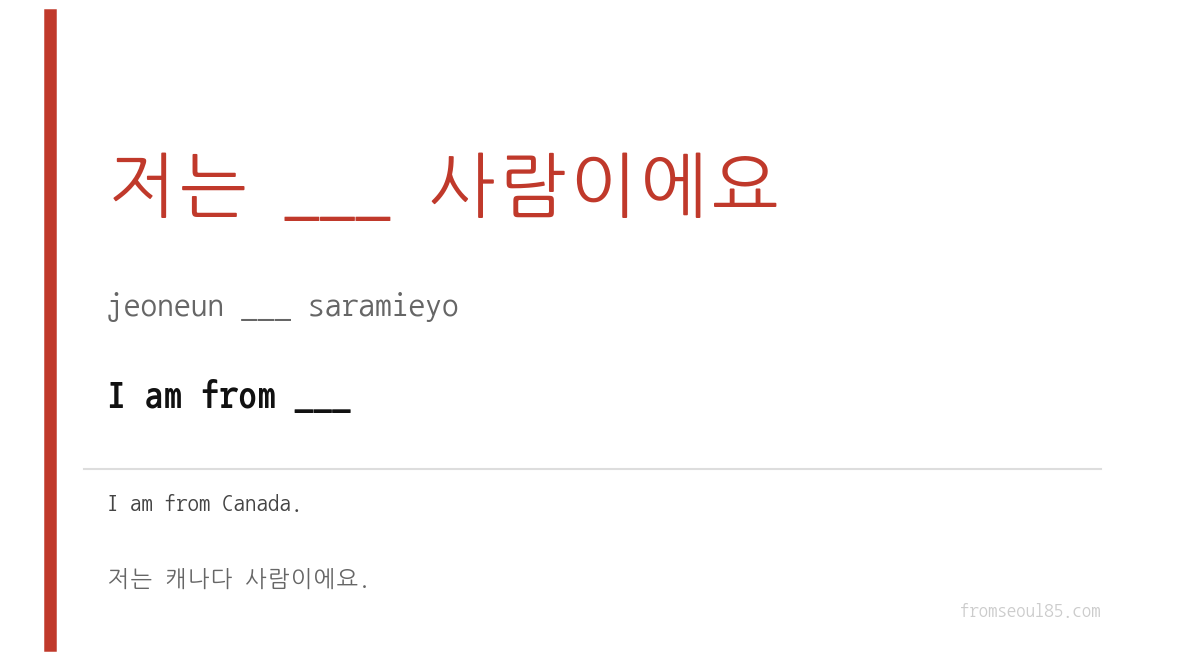
저는 ___ 사람이에요 (jeo-neun ___ sa-ra-mi-e-yo — I am from ___)
I am from Canada.
저는 캐나다 사람이에요.
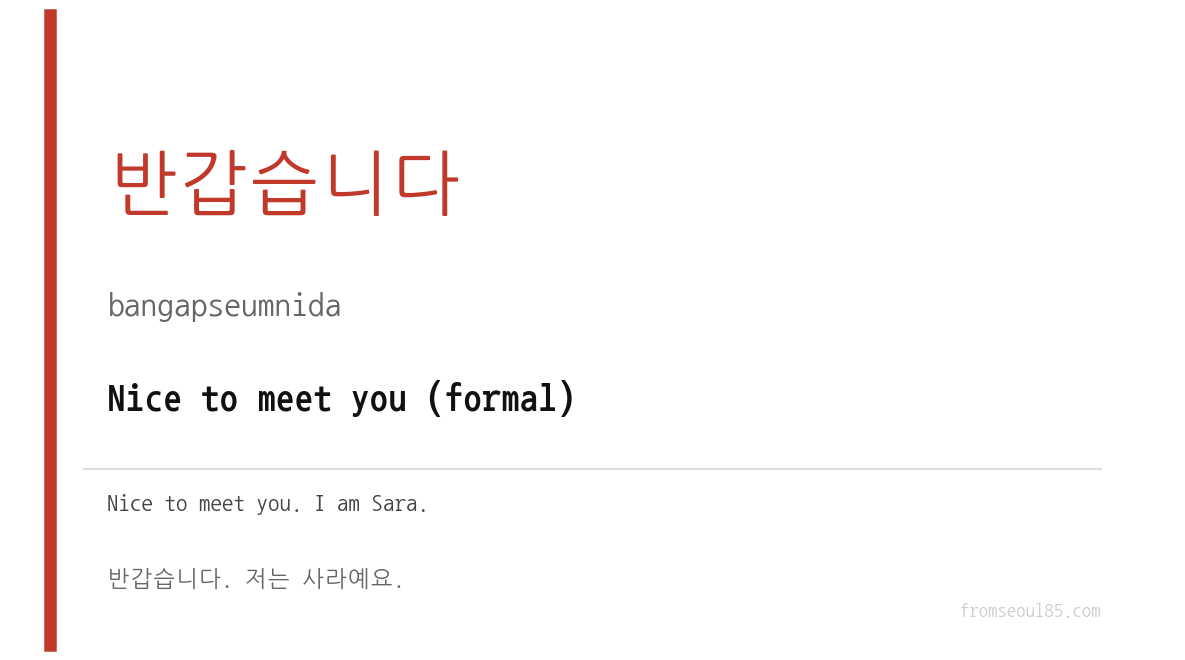
반갑습니다 (ban-gap-seum-ni-da — Nice to meet you, formal)
Nice to meet you. I am Sara.
반갑습니다. 저는 사라예요.
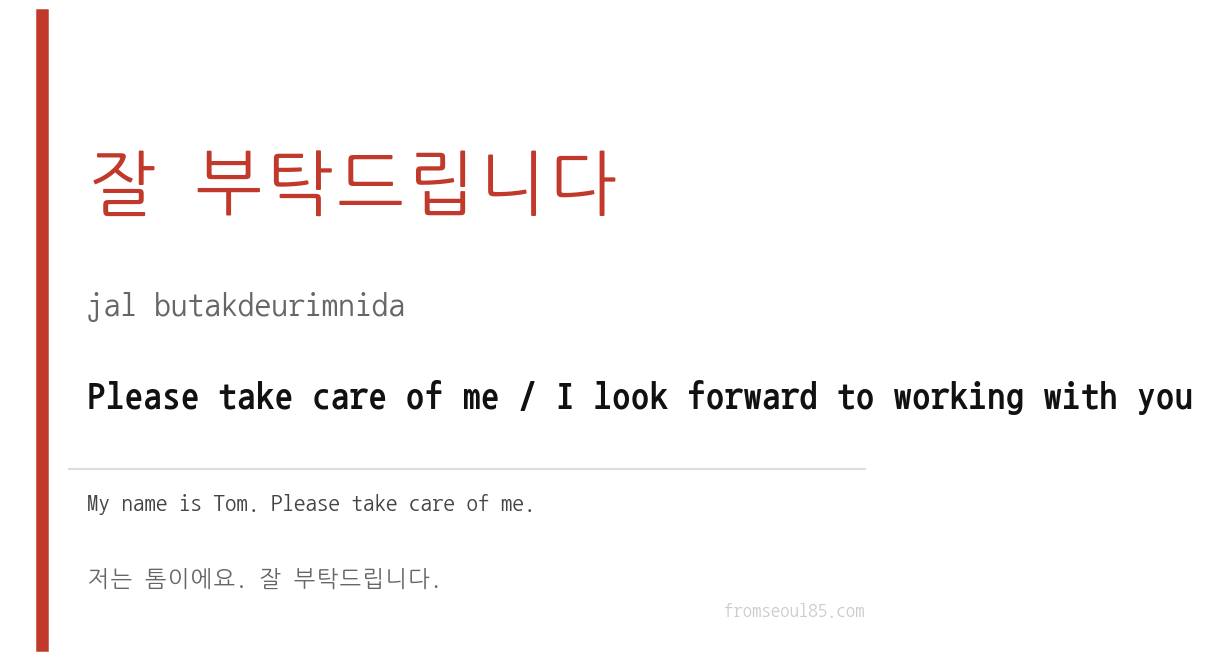
잘 부탁드립니다 (jal bu-tak-deu-rim-ni-da — Please take care of me / I look forward to this)
My name is Tom. Please take care of me.
저는 톰이에요. 잘 부탁드립니다.
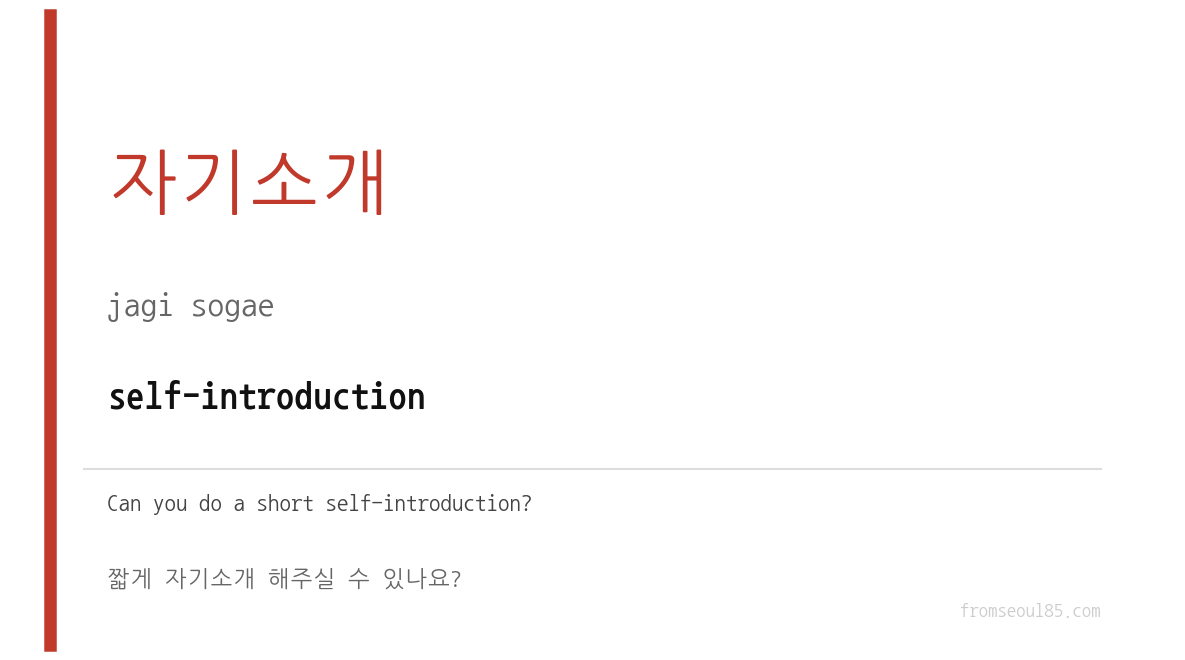
자기소개 (ja-gi so-gae — self-introduction)
Can you do a short self-introduction?
짧게 자기소개 해주실 수 있나요?
Written by a native Korean speaker born in Seoul in 1985. This is my personal experience. Other Koreans may see things differently.