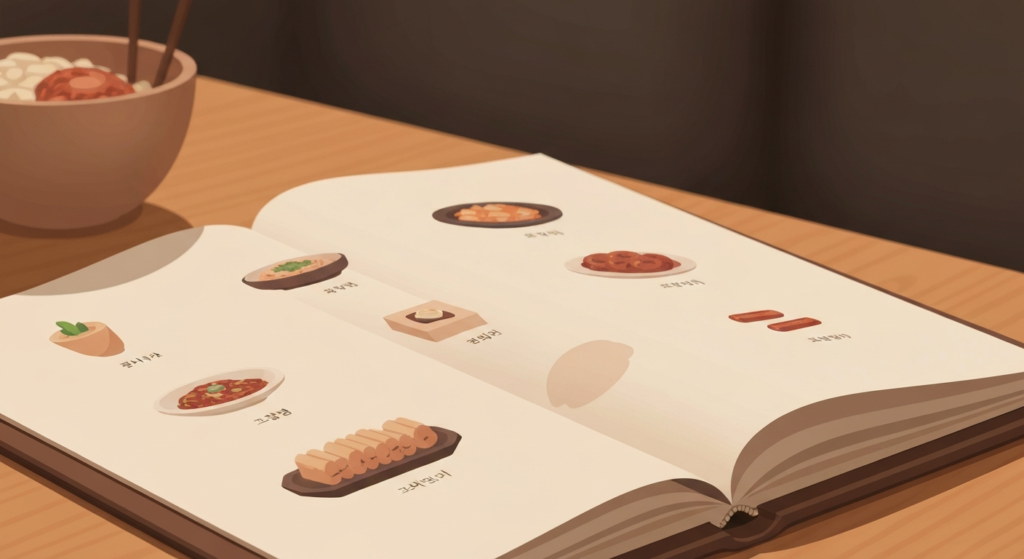
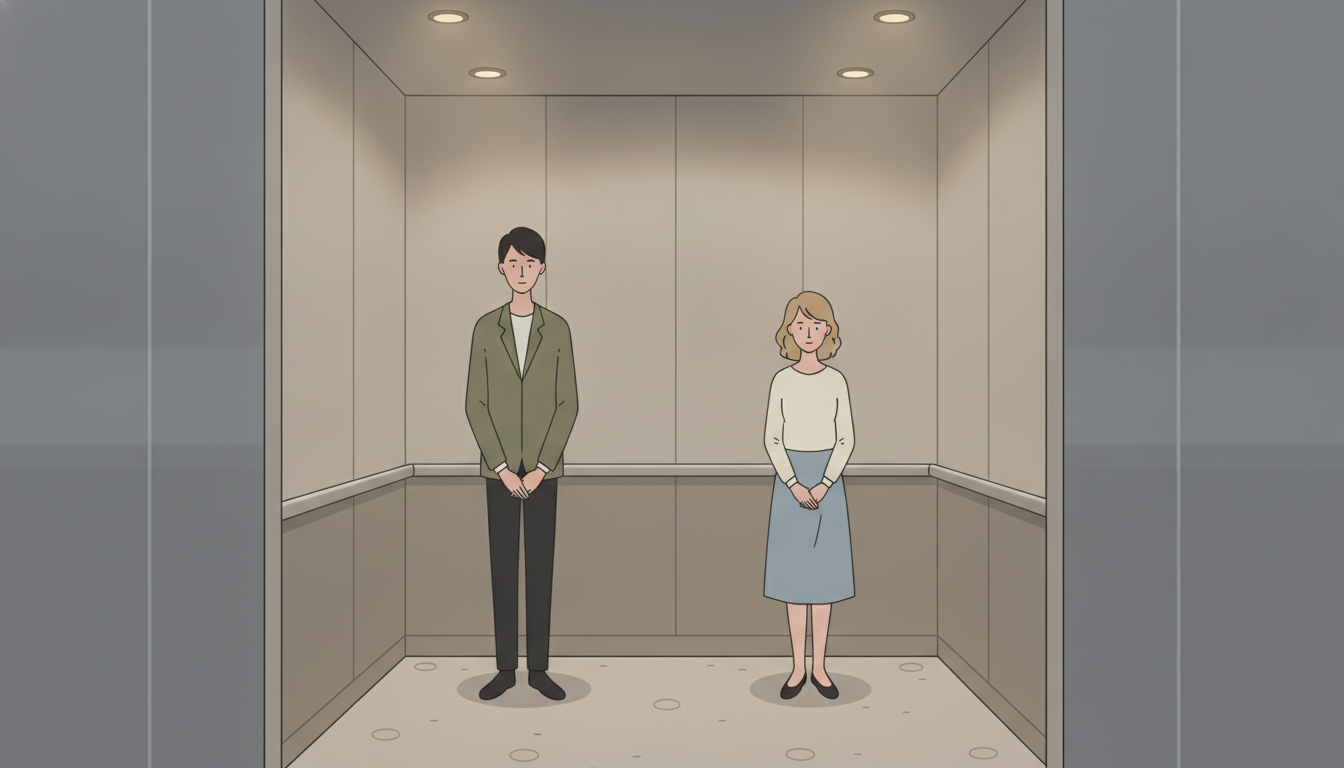
You step into the elevator in your apartment building. A neighbor you barely know steps in right after you. The doors close, and the small space goes quiet. You want to say something, but your mind goes blank. This is exactly the moment when you need to know what to say in a Korean elevator, and it turns out even Korean people struggle with it, not just learners of the language. In my own daily life, that awkward pause still catches me sometimes, even after living in Seoul my whole life. If the neighbor lives across from me and I run into them often, I usually just nod. If it’s someone I don’t know at all, I don’t bother saying anything. A short nod covers a lot of ground in Korean apartment culture, and nobody thinks it is rude. This is my personal experience. Other Koreans may see it differently.
Annyeonghaseyo: The Safe Default Greeting
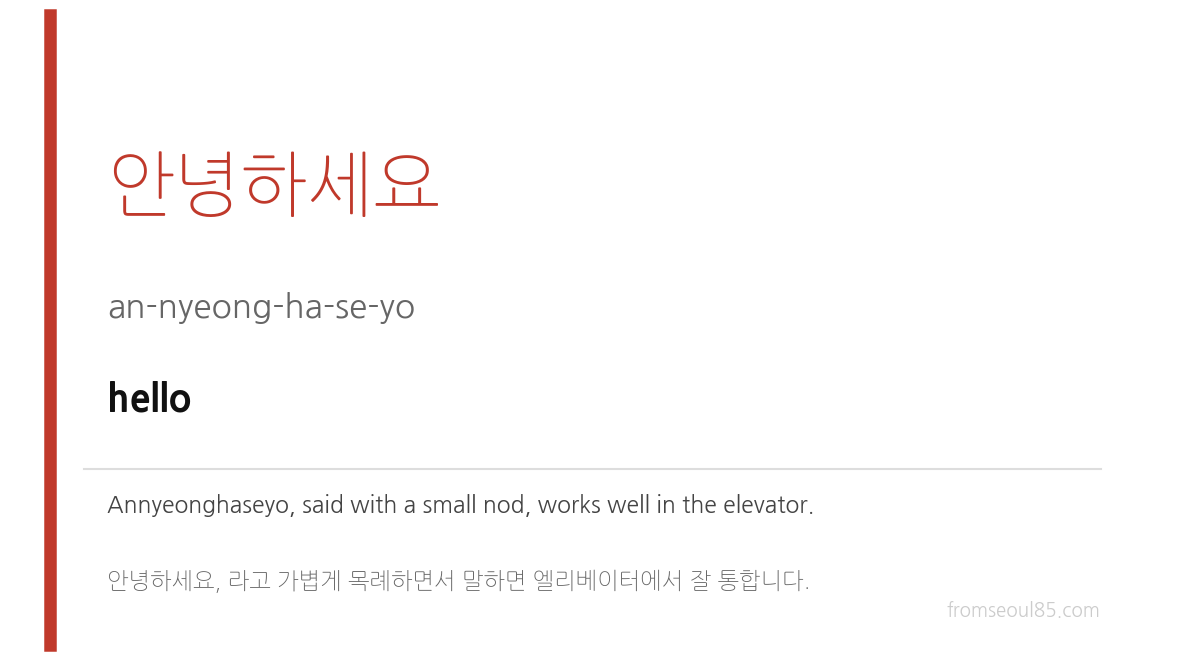
안녕하세요 (an-nyeong-ha-se-yo — hello) is the safest phrase you can use. It works for almost anyone in your building, no matter their age. You can say it out loud, or you can just nod your head instead. Plenty of Koreans skip the full phrase and use a small nod, especially with someone they pass often. A short bow with eye contact also feels natural and needs no words at all. Saying the full phrase suits an older neighbor or someone you have never met. A quick nod feels fine for someone close to your own age.
For me, it really depends on the moment. There’s no strict rule I follow in my head. Most of the time, though, I just say a light annyeonghaseyo and leave it there. I don’t sit there calculating whether the person looks older or younger than me. I just say it lightly, and that’s the end of it.
Myeot-cheung-gaseyo: Asking About the Floor
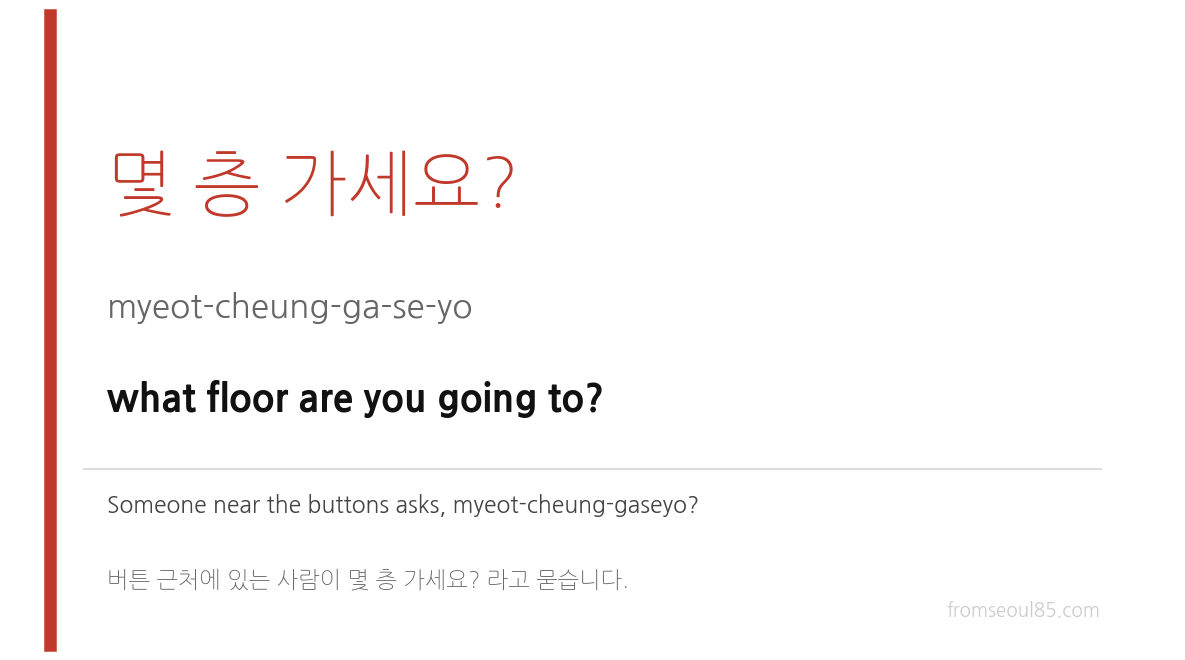
몇 층 가세요? (myeot-cheung-ga-se-yo — what floor are you going to?) is a common line, especially from whoever is standing near the buttons. It shows a bit of care without leading to a long conversation. You just answer with a number, like 5-cheung (fifth floor), and that’s usually enough. This phrase works with strangers of any age. It feels polite, not personal, and the exchange often stops right there. That quiet ending feels normal in Korea, not rude at all.
Honestly, I don’t usually ask this to a stranger first. I tend to let it stay quiet unless someone else brings it up. But if it’s a coworker, or someone above me at work, I’ll ask what floor they’re headed to and press the button for them. Even then, I don’t try to keep the conversation going after that. The floor question is really just a small gesture, not an invitation to chat.
Oneul Nalssi Joneyo: Small Talk About the Weather
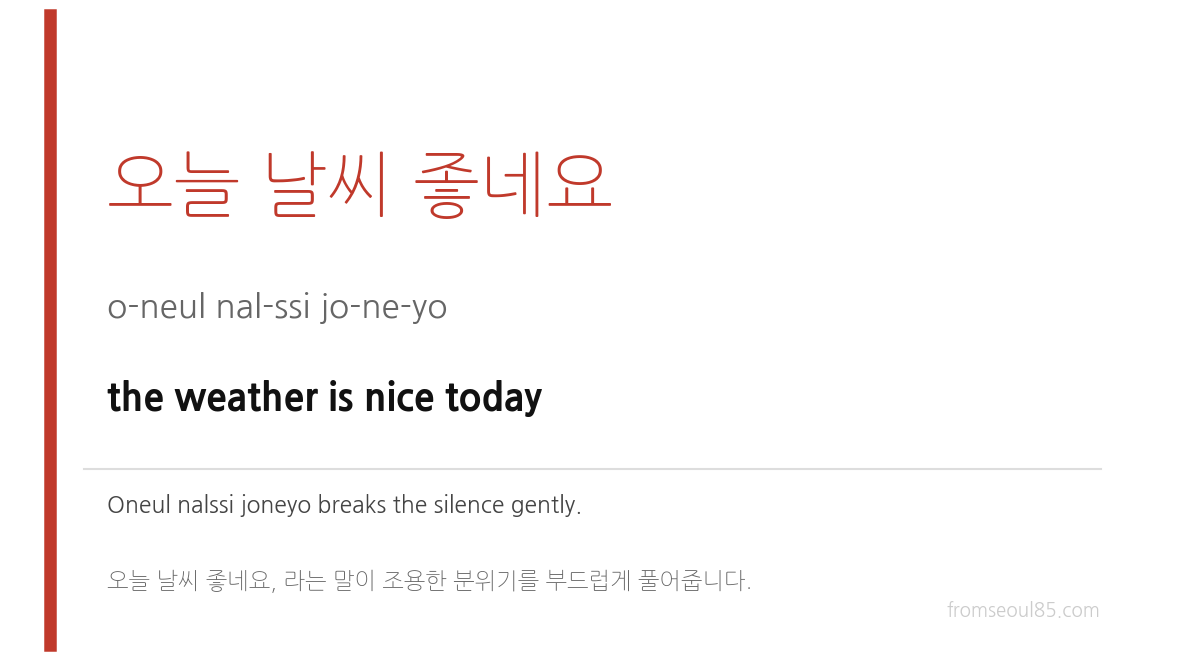
오늘 날씨 좋네요 (o-neul nal-ssi jo-ne-yo — the weather is nice today) fills a quiet moment nicely. It works well when the ride feels a little longer than usual, like when the elevator stops on several floors. On a colder day, you can also say 오늘 좀 춥네요 (o-neul jom chum-ne-yo — it’s a bit cold today). Weather talk feels safe with someone you barely know, because it asks nothing personal and needs no real answer. A simple 네, 그러네요 (ne, geu-reo-ne-yo — yes, it is) closes the topic without effort. This kind of small talk feels light, not deep, and that’s exactly the point.
Weather talk happens a lot for me too. It’s an easy way to fill silence without getting into anything personal. I don’t think about it much before I say it, it just comes out when the ride feels a bit too quiet.
Meonjeo Naeriseyo: Letting Someone Go First
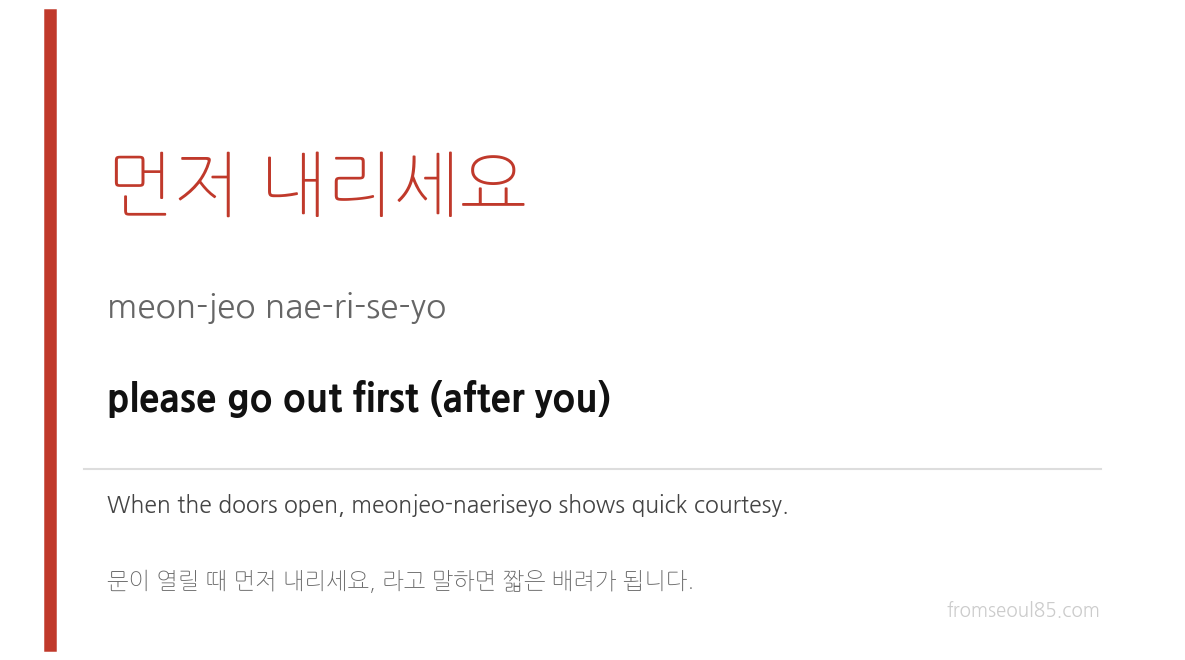
먼저 내리세요 (meon-jeo nae-ri-se-yo — please go out first) is useful the moment the doors open. You say it when someone is standing behind you and you want to let them exit first. It shows basic courtesy without much effort at all. A shorter version, just 먼저요 (meon-jeo-yo — after you), works fine for a casual, quick moment. Older neighbors often get this small courtesy before anyone else. It costs one second, but it feels respectful.
I actually do it the other way around. I get off first and hold the door open, especially when there are a lot of people waiting to get out. I don’t usually tell someone older to go ahead while I stay inside, because that means I still have to get off after them anyway. So instead, I just step out first and hold the door so it’s easier for everyone else to leave.
What to Avoid, and Why Silence Works Fine
Avoid asking personal questions like age, job, or marriage status. These questions feel too direct for a short elevator ride with someone you barely know. Save deeper questions for people you actually know well, like a close neighbor or a coworker. Silence is also a completely fine option in this short window of time. Many Koreans stay quiet and just nod politely, and nobody reads that as cold. You don’t need to fill every second with words. A calm, brief exchange feels more natural than forcing a long chat with a stranger.
When I don’t know the neighbor, I just nod and don’t talk much. Honestly, if I said something and it turned awkward, I’d probably feel uncomfortable for the rest of the ride. So staying quiet feels more comfortable to me, and I think a lot of Koreans feel the same way, even if we don’t say it out loud.
A Quick Cultural Note
Apartment living in Korea puts a lot of strangers into small shared spaces every day, and the elevator is one of the tightest of them. Because of that, Korean elevator manners lean toward short and light, not toward deep conversation. This same pattern shows up in other short interactions too, like how Koreans end small talk at work, where a quick, polite line is often better than dragging a conversation out. If you want to read more about how Korean honorific speech shapes these small moments, the Wikipedia entry on Korean honorifics is a good starting point.
A Couple of Practical Tips
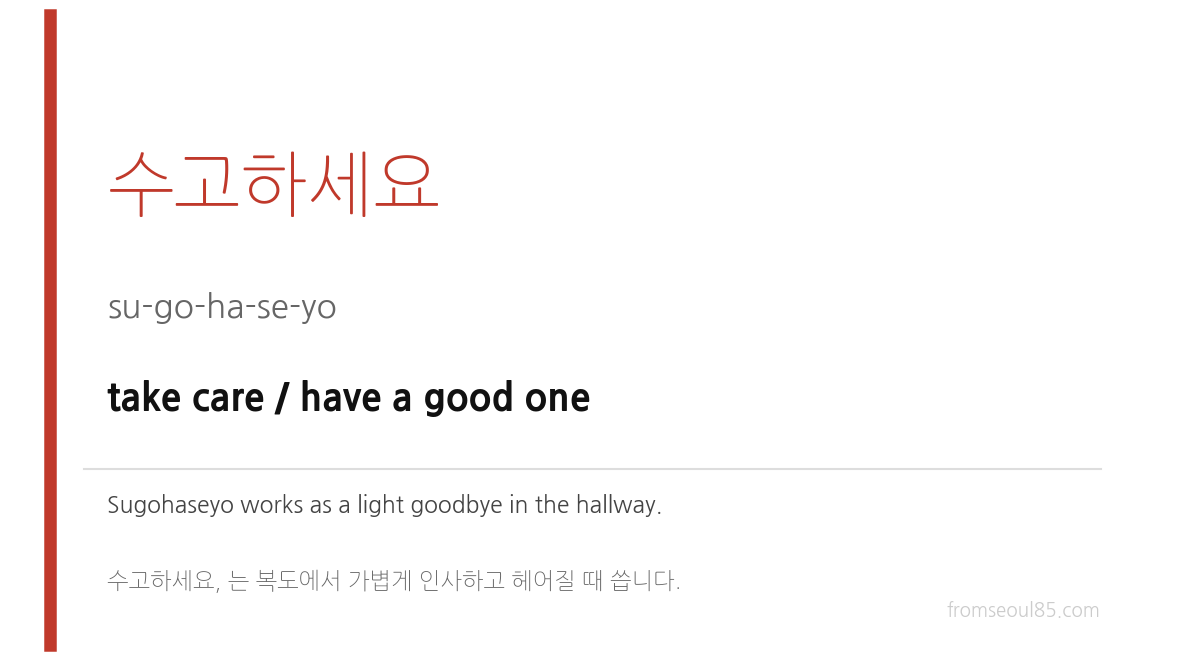
If you’re leaving the elevator and heading in a different direction than your neighbor, 수고하세요 (su-go-ha-se-yo — take care) works as a light goodbye in the hallway. It’s short, it’s polite, and it doesn’t demand a reply beyond a nod. When in doubt, remember that a nod plus a small bow already covers most elevator situations in Korea. You really don’t need five sentences ready, just one calm phrase, or even none at all, is often enough.
Key Expressions
- 안녕하세요 (an-nyeong-ha-se-yo) — hello. Example: Annyeonghaseyo, said with a small nod, works well in the elevator.
- 몇 층 가세요? (myeot-cheung-ga-se-yo) — what floor are you going to? Example: Someone near the buttons asks, myeot-cheung-gaseyo?
- 오늘 날씨 좋네요 (o-neul nal-ssi jo-ne-yo) — the weather is nice today. Example: Oneul nalssi joneyo breaks the silence gently.
- 먼저 내리세요 (meon-jeo nae-ri-se-yo) — please go out first (after you). Example: When the doors open, meonjeo-naeriseyo shows quick courtesy.
- 수고하세요 (su-go-ha-se-yo) — take care / have a good one. Example: Sugohaseyo works as a light goodbye in the hallway.
Written by a native Korean speaker born in Seoul in 1985. This is my personal experience. Other Koreans may see things differently.