Listen to two Korean friends talk for five minutes, and you will hear it at least once: 막 (mak). If you are searching for the mak meaning korean speakers use every day, you already noticed it does not translate the same way twice. Sometimes it means “just now.” Sometimes it means “randomly” or “without care.” Sometimes it just makes a feeling stronger, like “really.” One short syllable, several jobs. That is exactly why 막 trips up learners who try to memorize a single dictionary meaning for it.

What Does 막 (Mak) Mean in Korean?
I use this word all the time, honestly more than I even notice until someone points it out. When I text a friend, I might write 나 방금 막 밥 먹었어 (na bangeum mak bap meogeosseo — I just ate a second ago). If someone asks why I did something a certain way, I might just answer 몰라 막 하다 보니 그렇게 됐어 (molla mak hada boni geureoke dwaesseo — I don’t know, I just did stuff and it ended up that way). In polite speech, I would say 저 방금 막 왔어요 (jeo bangeum mak wasseoyo — I just arrived). Notice how the meaning of 막 shifts slightly in each sentence. That flexibility is the whole story of this word.
Using 막 for “Just Now” (Recency)
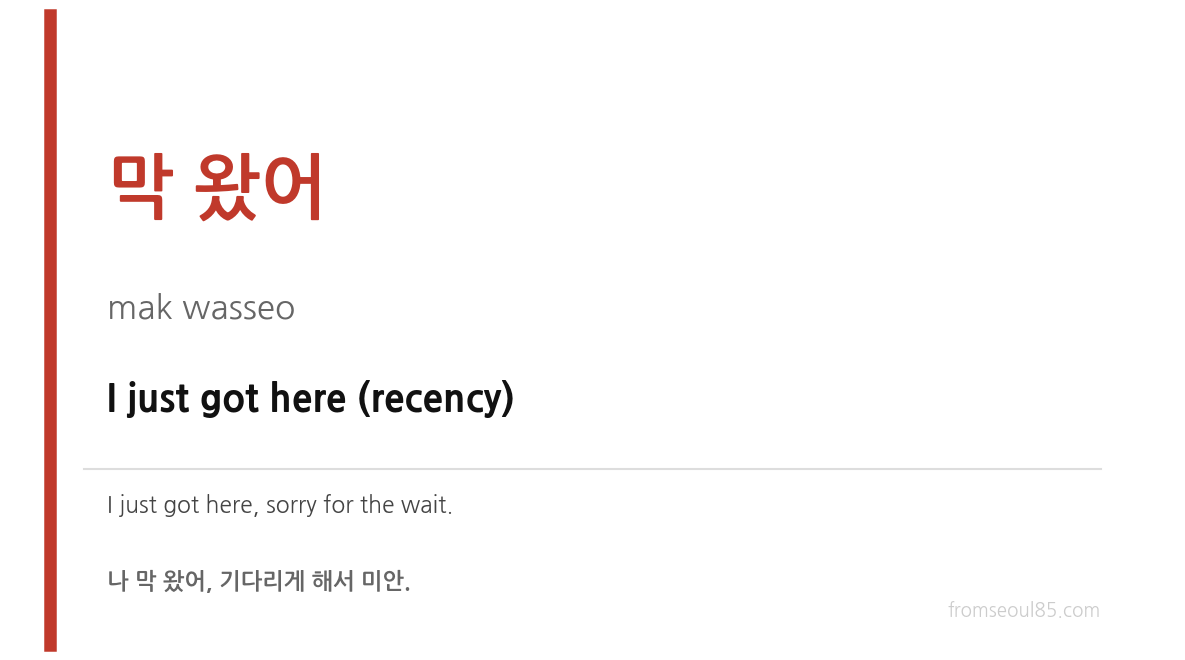
Picture this. You just walked into a cafe. Your friend texts, “Are you here?” You need a fast reply. Casual: 나 막 왔어 (na mak wasseo — I just got here). Polite: 저 방금 막 왔어요 (jeo bangeum mak wasseoyo — I just arrived). You could also say 막 도착했는데 아무도 없네 (mak dochakaenneunde amudo eomneune — I just arrived, but no one is here).
When I actually get this text from a friend, my real reply is usually shorter. I just type 어 막 왔어 (eo mak wasseo — yeah, just got here) or, if I want to sound relaxed, 방금 도착! (bangeum dochak! — just arrived!). In polite situations, like replying to an older coworker, I would write 네 저 방금 도착했어요 (ne jeo bangeum dochakaesseoyo — yes, I just arrived). Honestly, I skip 막 a lot of the time too. It is common, not required. This is my personal experience. Other Koreans may text differently.
Using 막 for “Carelessly” or “Randomly”
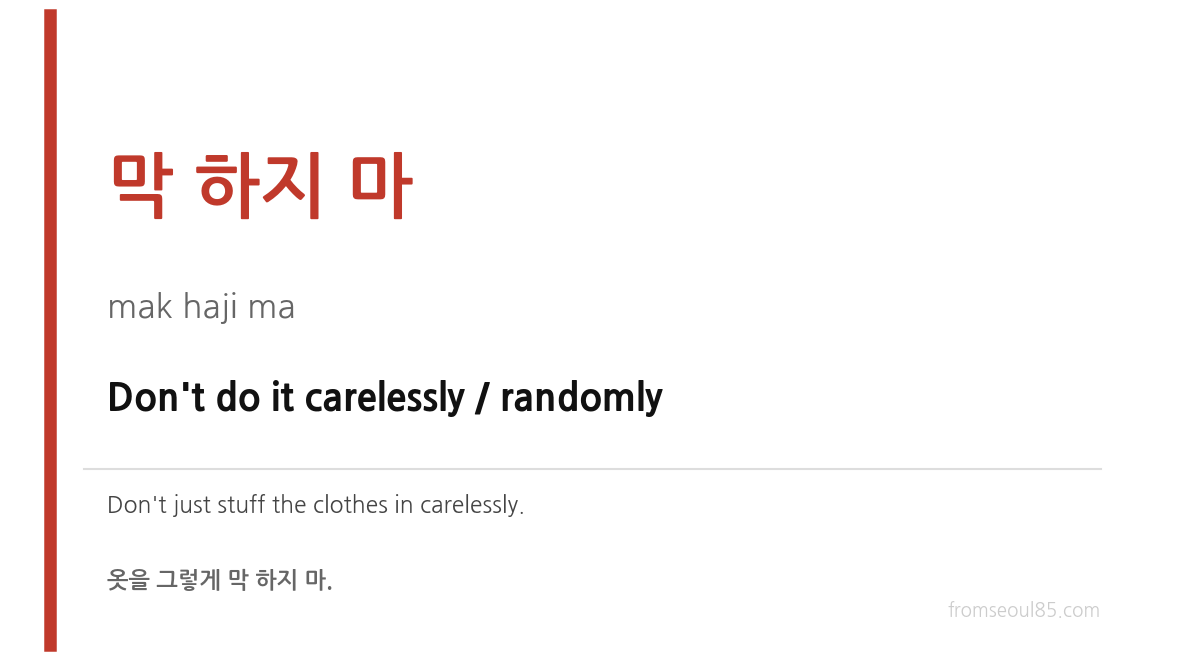
Now picture packing a bag in a hurry. You are not folding anything, just shoving clothes in. Casual: 그냥 막 던져 넣어 (geunyang mak deonjyeo neoheo — just toss it in without care). Polite: 막 하지 마세요 (mak haji maseyo — please don’t do it so carelessly). Example: 옷을 막 구겨 넣었어 (oseul mak gugyeo neoheosseo — I just stuffed the clothes in). Here 막 means something closer to “without thinking” or “any old way.”
When I am the one rushing, I say something like 아 그냥 막 넣어 (a geunyang mak neoheo — ah, just shove it in). If I see someone else being too rough with something, like tossing a fragile bag around, I might say 야 그렇게 막 하지 마 (ya geureoke mak haji ma — hey, don’t do it so carelessly like that). I rarely need a polite version of this one, since I am usually saying it to friends or family. If I really had to say it politely, I would soften it to 그렇게 하시면 안 돼요 (geureoke hasimyeon an dwaeyo — you shouldn’t do it that way), dropping 막 entirely to sound more respectful.
Using 막 as an Intensifier (“Really”)
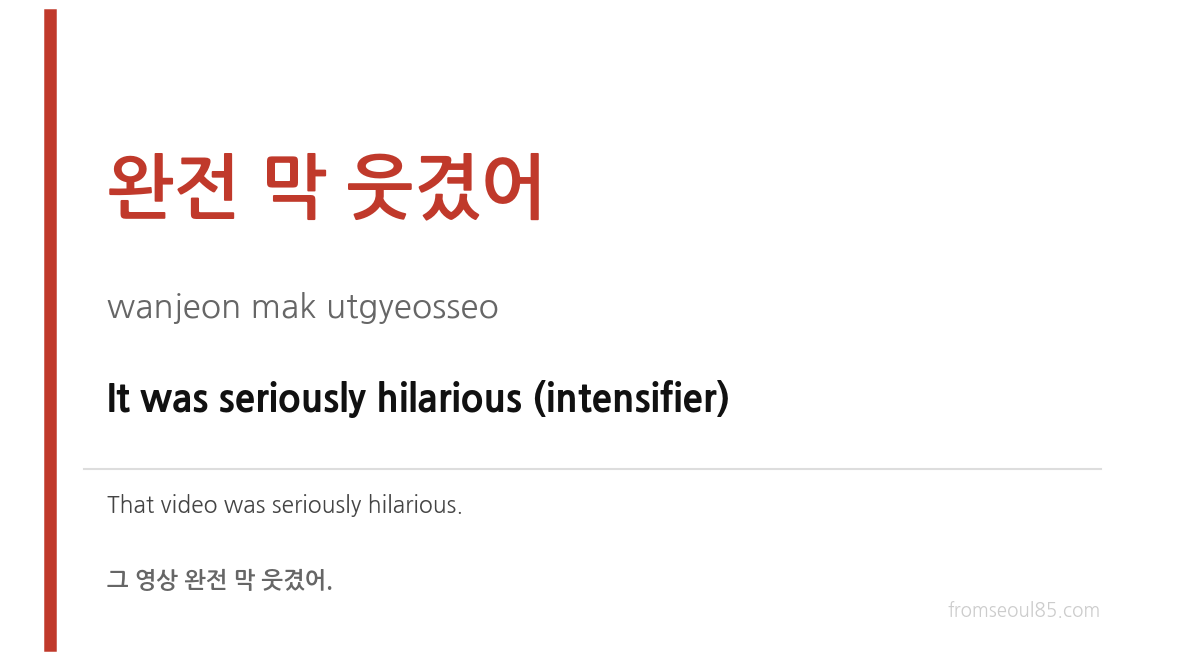
Picture watching a funny video with a friend. You want to say it was really funny. Casual: 완전 막 웃겼어 (wanjeon mak utgyeosseo — it was seriously hilarious). Polite: 진짜 막 좋아해요 (jinjja mak johayo — I really like it a lot). Example: 그 영화 막 재밌더라 (geu yeonghwa mak jaemitdeora — that movie was really fun). Here 막 pumps up the feeling, close to “really” or “so much.”
In real life, when something is genuinely funny, my go-to reaction is 완전 웃겼어ㅋㅋㅋ (wanjeon utgyeosseo kkk — seriously hilarious, lol) or just 개웃겨 (gae-utgyeo — hilarious). I do add 막 sometimes, like 막 웃기더라 (mak utgideora — it was really funny), but not every single time. It depends on my mood, honestly. In polite speech, I would just say 너무 재밌었어요 (neomu jaemisseosseoyo — it was so much fun), no 막 needed at all.
Mak Geuraesseo and Sudden Actions
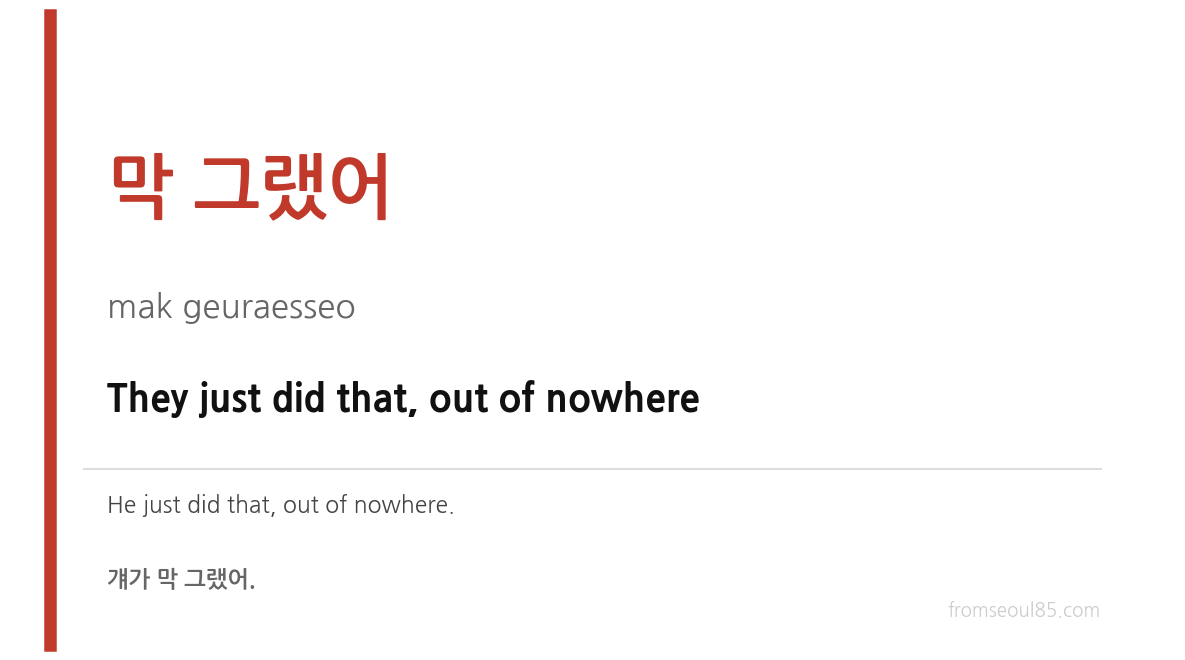
There is another common pattern worth knowing: 막 그랬어 (mak geuraesseo — they just did that, out of nowhere). This one describes an action that happened suddenly, without warning or a clear reason. If a coworker suddenly snapped at someone for no obvious cause, you could describe it later with 걔가 막 그랬어 (gyaega mak geuraesseo — she just did that, out of nowhere). The mak geuraesseo meaning leans on surprise as much as speed. It is less about timing and more about how unexpected the action felt to you.
Common Mistakes: Too Much 막, and Mak vs Geunyang

Some learners hear how often 막 shows up and start adding it to every sentence, hoping it sounds more native. It does not work that way. A sentence like 나 막 밥 막 먹었어, with 막 stuffed in twice, sounds off to a native ear. When I stack 막 like that, it starts to feel like a nervous filler word rather than natural speech. The cleaner, natural version keeps it to one spot: 나 막 밥 먹었어 (na mak bap meogeosseo — I just ate). One 막 per sentence is usually enough.
Learners also mix up 막 (mak) and 그냥 (geunyang). They are not the same word. 그냥 usually means “just because” or “no particular reason,” like when someone asks why you did something and you shrug and say 그냥 (geunyang — just because). 막 almost always adds motion, randomness, or emphasis to an action. Swapping one for the other can make a sentence feel slightly wrong, even if the listener still understands you. I am not fully sure how younger speakers use 막 these days, but for me, using it sparingly sounds cleaner and more natural.
A Few Practical Tips
If you want to sound natural with 막, start small. Try adding it once to describe something that just happened, like arriving somewhere. Once that feels comfortable, try it for something done carelessly, then for emphasis. Do not force it into every sentence you speak. Also, listen for how often native speakers actually drop 막 entirely, especially when replying quickly by text. If you want to see how another flexible, everyday Korean word gets used across situations, you might enjoy this guide on why Koreans say ildan constantly. For a more formal reference on Korean adverbs and their grammatical roles, the National Institute of Korean Language is a solid place to check standard usage.
Key Expressions
- 막 왔어 (mak wasseo) — I just got here (recency). Example: 나 막 왔어, 기다리게 해서 미안. (I just got here, sorry for the wait.)
- 막 하지 마 (mak haji ma) — Don’t do it carelessly / randomly. Example: 옷을 그렇게 막 하지 마. (Don’t just stuff the clothes in carelessly.)
- 완전 막 웃겼어 (wanjeon mak utgyeosseo) — It was seriously hilarious (intensifier). Example: 그 영상 완전 막 웃겼어. (That video was seriously hilarious.)
- 막 그랬어 (mak geuraesseo) — They just did that, out of nowhere. Example: 걔가 막 그랬어. (He just did that, out of nowhere.)
Written by a native Korean speaker born in Seoul in 1985. This is my personal experience. Other Koreans may see things differently.