Korean has two main speech levels. One is casual. One is formal. We call them 반말 (ban-mal — casual speech) and 존댓말 (jon-daet-mal — formal/polite speech). In English, learners search for these as banmal and jondaemal. Getting this wrong can feel awkward or even rude. So let me break it down from my own experience.
Banmal vs Jondaemal: The Quick Version
Here is my one-line version. At school, classmates your own age use 반말 with ease. 존댓말 with a same-age classmate can even feel odd there. But outside school, 존댓말 is the safe base for almost everyone.
존댓말 (Jondaemal): The Default
존댓말 is the default in Korea. Meet someone new? Use it. Younger than them? Use it. At work, use it with people above you. I still use 존댓말 with most older relatives.
There are exceptions, though. I use 반말 with an older cousin I grew up with. We were close from childhood, so it felt natural. But I still call him 형 (hyeong — older brother). Casual words and a respectful title can live together.

반말 (Banmal) and 반말 트기
반말 is for close relationships. Friends your age, younger siblings, or people who invite it. That moment of switching is called 반말 트기 (ban-mal teu-gi — breaking into casual speech). It is small, but a real social event.
In my experience, 반말 트기 means something. It says, “I want a closer relationship with you.” People rarely offer it unless they mean it. Outside same-age classmates, starting with 반말 is unusual. First-meeting 반말 reads as rude, or as an older-generation habit.
Age, Closeness, and Generation
Age matters, but it is not everything. For me, the real line is closeness. Are we close or not? That one thing decides most of it.
When I was young, adults used 반말 with kids freely. That felt normal back then. These days, it is changing. Some people quietly think, “You barely know me. Why 반말?” So even I lead with 존댓말 now, younger or older. This is my personal experience. Other Koreans may see it differently.

Talking to Someone Your Age
One tricky spot: someone the same age as you. Koreans often ask “How old are you?” early on. This helps set the speech level. Even with same-age people, jumping straight to 반말 is rare. These days, 존댓말 at first feels natural.
After you get closer, you agree to 반말 together. If you never get close, you might keep 존댓말 forever. Some friends even keep 존댓말 on purpose. 반말 can get too casual, and people sometimes get a little rude with it.
My Advice for Learners
As a learner, here is my honest advice. Start with 존댓말 when you are unsure. Koreans appreciate the effort. When someone says “편하게 해요 (pyeon-ha-ge hae-yo — speak comfortably)”, that is your green light. Switch to 반말 then.
But here is the real truth. If you are still learning Korean, most people will not mind either way. Speak with confidence. Walk in and say “밥 줘 (bap jwo — give me food)!” We will probably just smile and feed you. At least with me, 반말 is completely fine.
Key Expressions
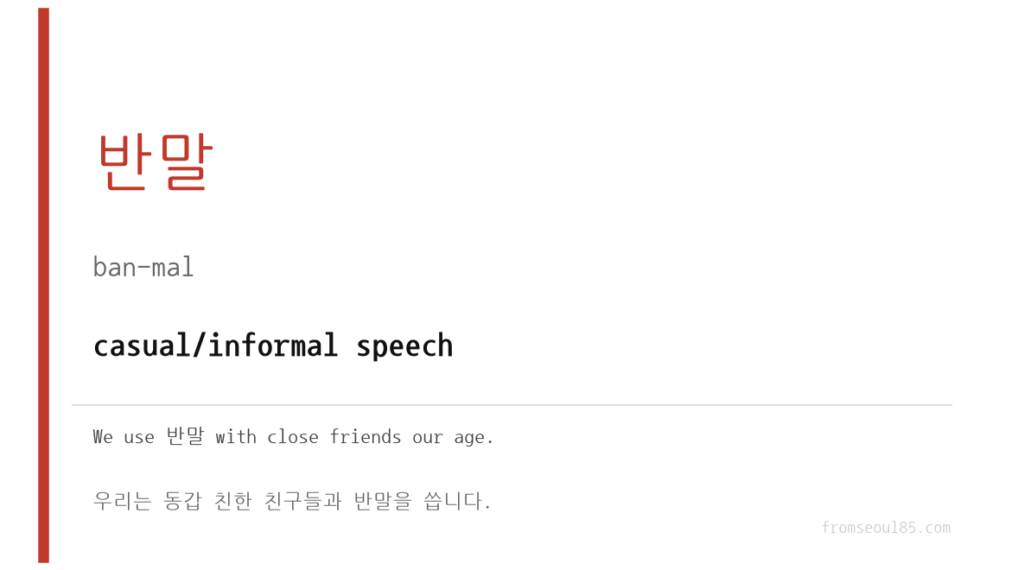
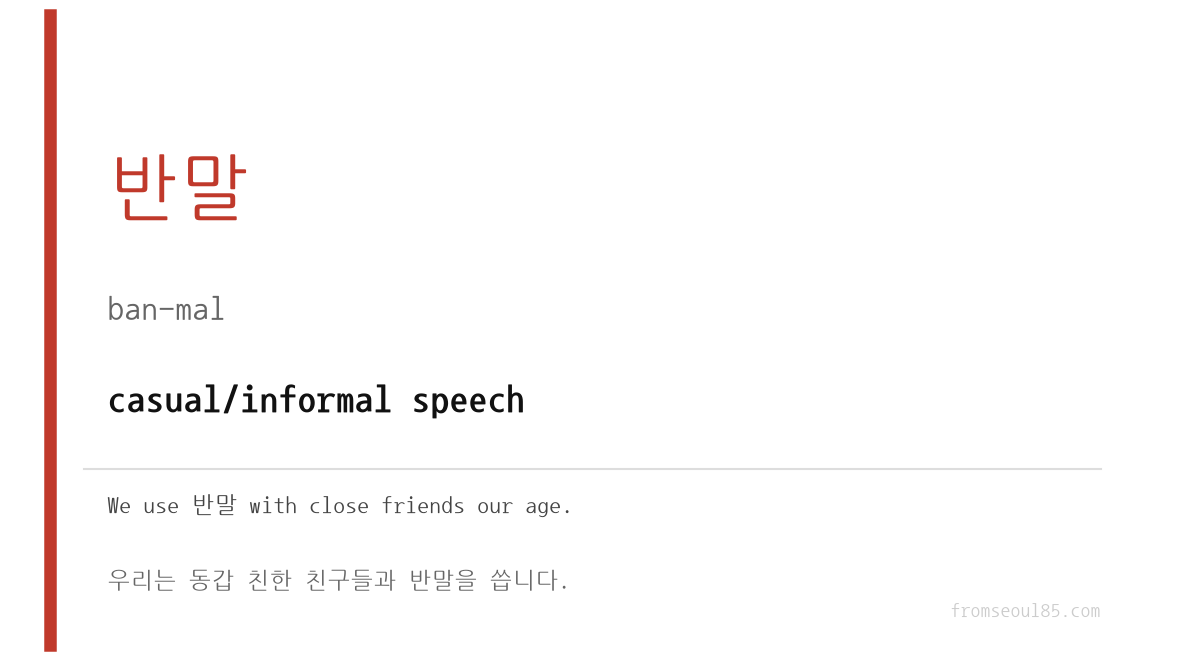
반말 (ban-mal — casual/informal speech)
We use 반말 with close friends our age.
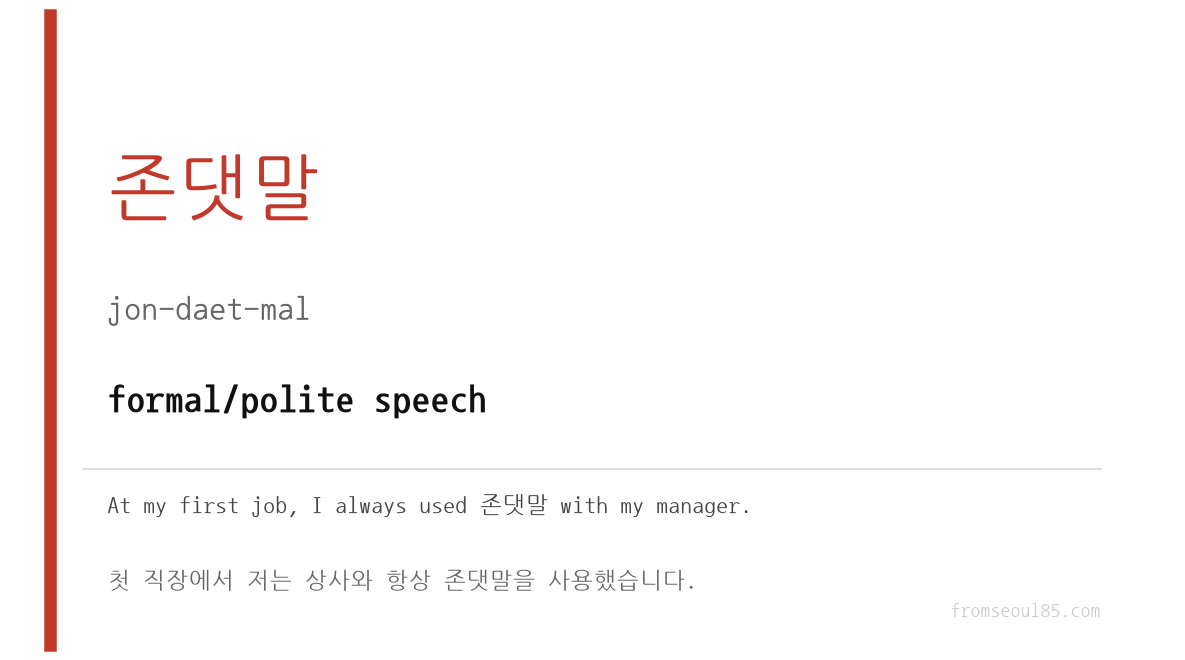
존댓말 (jon-daet-mal — formal/polite speech)
At my first job, I always used 존댓말 with my manager.
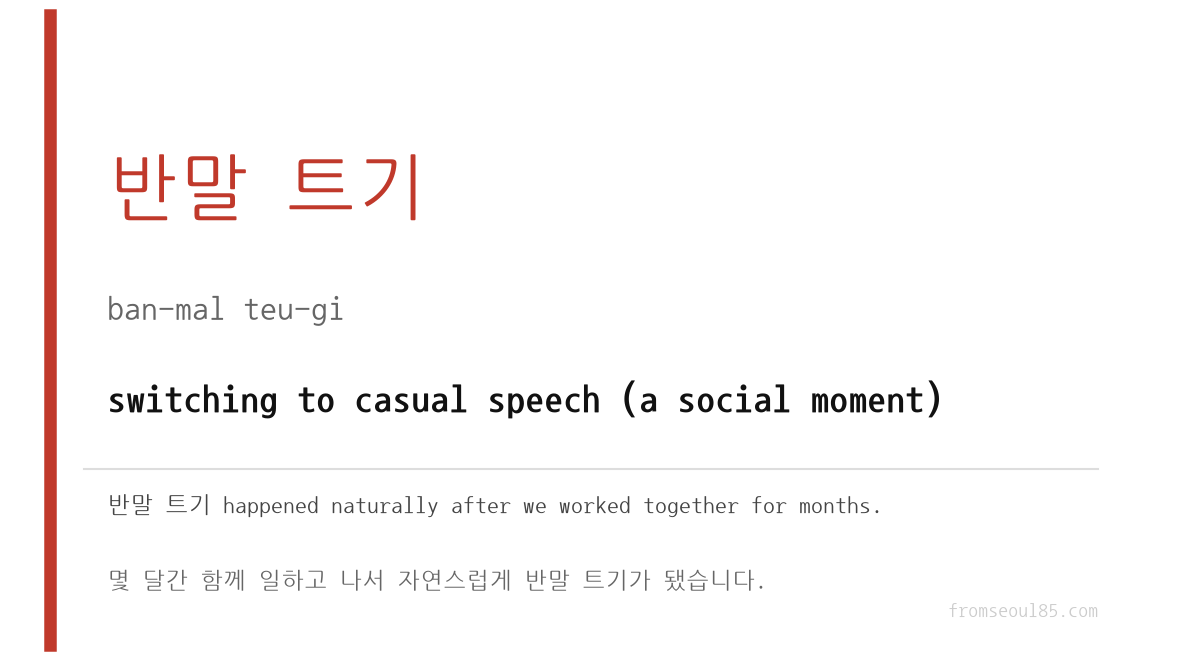
반말 트기 (ban-mal teu-gi — switching to casual speech (a social moment))
반말 트기 happened naturally after we worked together for months.
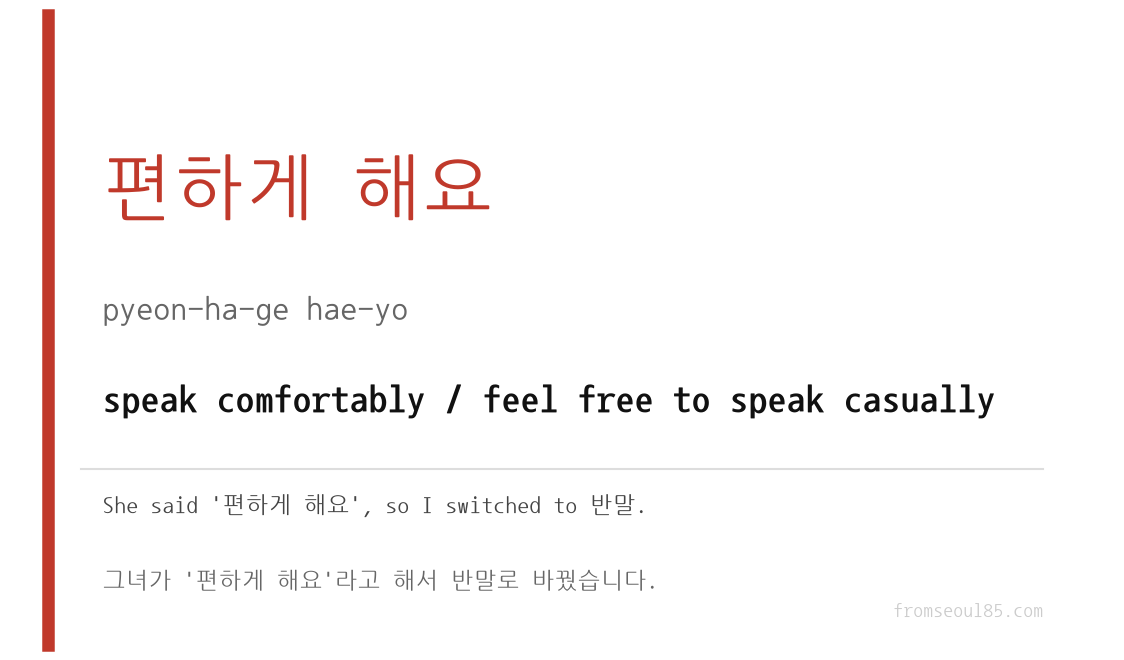
편하게 해요 (pyeon-ha-ge hae-yo — speak comfortably / feel free to speak casually)
She said “편하게 해요”, so I switched to 반말.
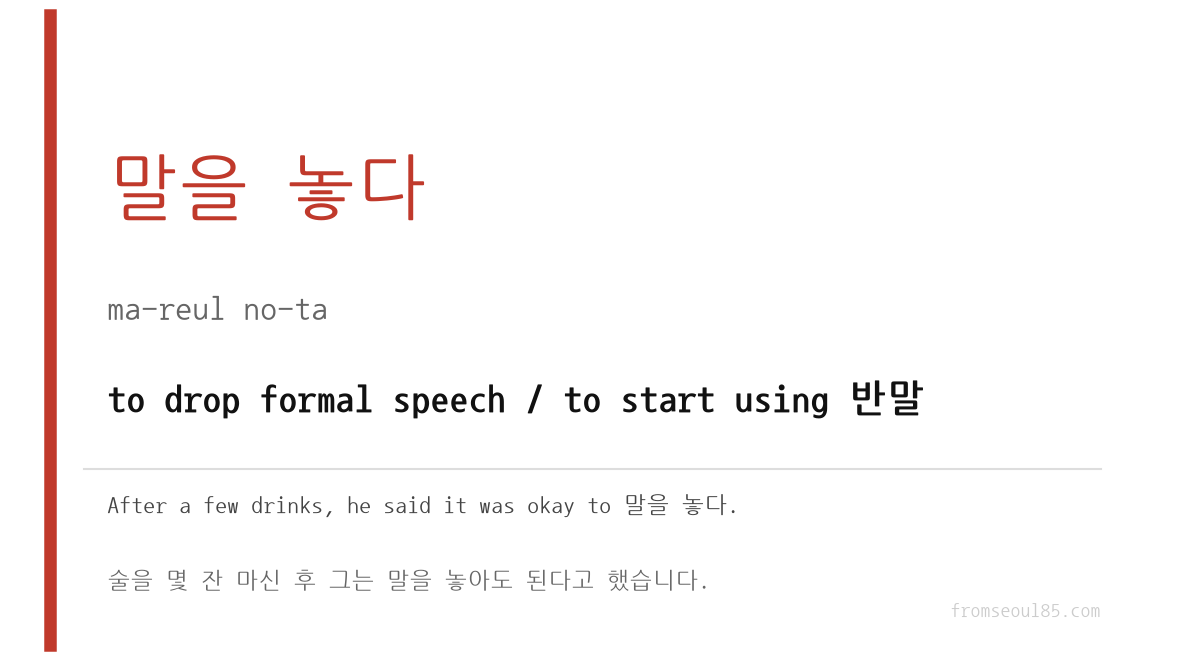
말을 놓다 (ma-reul no-ta — to drop formal speech / to start using 반말)
After a few drinks, he said it was okay to 말을 놓다.
Written by a native Korean speaker born in Seoul in 1985. This is my personal experience. Other Koreans may see things differently.