Most textbooks teach you two words first: 네 (ne — yes) and 아니요 (a-ni-yo — no). Simple, right? In real Korean life, it is not that simple. The tricky part is not the words themselves. It is knowing when to use them — and when they flip meaning completely.
Yes, No, Yeah — The Four Words You Need
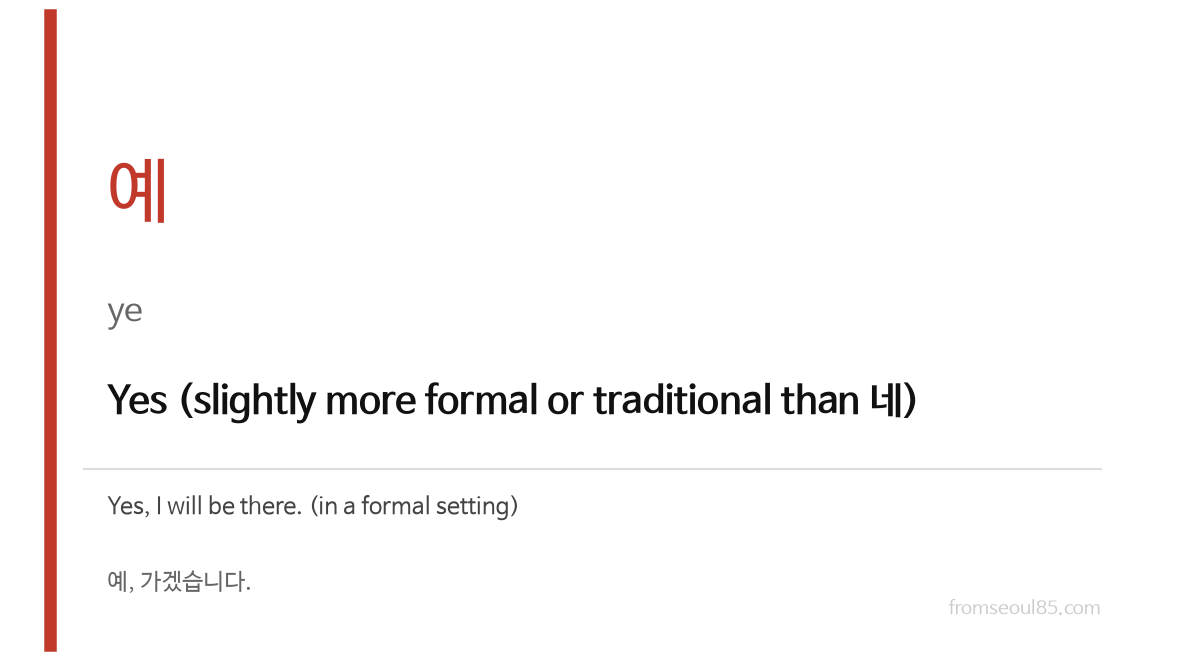
네 (ne) is the standard polite way to say yes. You will also hear 예 (ye — yes). Both mean the same thing. In the past, some Koreans may have made a distinction between the two. These days, most people use 네 and 예 the same way.
The real difference is between 네/예 and 응 (eung — yeah) or 어 (eo — yeah). 네 and 예 feel like formal speech. 응 and 어 feel like casual speech. Think of it simply: 네 is polite, 응 is informal.
Using 네 or 예 with a close friend feels strange. It sounds like you are treating them like a stranger or a boss. Using 응 or 어 with someone older feels disrespectful. It sounds like you are speaking down to them.
Personally, when I was young, I used 응 and 어 with my parents without thinking. We spoke casually at home. Now that I use formal speech with them, 응 and 어 feel a little odd. And with my boss at work? I would never say 응 or 어 to him. That would seem very rude.
How Yes and No in Korean Actually Work
Here is the part that confuses many learners. In Korean, 네 and 아니요 do not respond to your own situation. They confirm whether the other person’s statement is true.
Think of it this way. 네 means “you are right.” 아니요 means “you are wrong.”
Imagine someone asks: 밥 안 먹었어요? (bap an meo-geo-sseo-yo — You haven’t eaten yet, right?) If you have not eaten, you say 네, 안 먹었어요 (ne, an meo-geo-sseo-yo — Yes, I haven’t eaten). That 네 means: your statement is correct. I have not eaten.
In English, saying “yes” to “you haven’t eaten, right?” sounds strange. In Korean, it makes perfect sense. You are not confirming what you want. You are confirming that the other person’s words are accurate.
When 네 Just Means “I Hear You”
There is one more layer. Korean people sometimes say 네 in conversation just to show they are listening. It is similar to “uh-huh” or “I see” in English.
You will notice this on phone calls. 네, 네, 네 in a row does not mean the person agrees with everything three times. They are just showing they are following along. Sometimes you will also hear 어, 응, or even 아 instead.
At moments like this, tone matters more than the word. 응 said in a flat tone means yes. 응 said with a rising tone — 응? — can mean “what?” or even “that’s not right.” The same word, completely different meaning.
This is my personal experience. Other Koreans may see it differently.

How Koreans Say No
아니요 (a-ni-yo) is the polite form of no. In casual speech, you will hear 아니 (a-ni) or 아니야 (a-ni-ya). In everyday conversation, 아니요 is usually just the start of a longer sentence. The full version might be something like: 아니요, 저 그거 안 할 겁니다 (a-ni-yo, jeo geu-geo an hal-geom-ni-da — No, I will not do that). In practice, people often stop after 아니요.
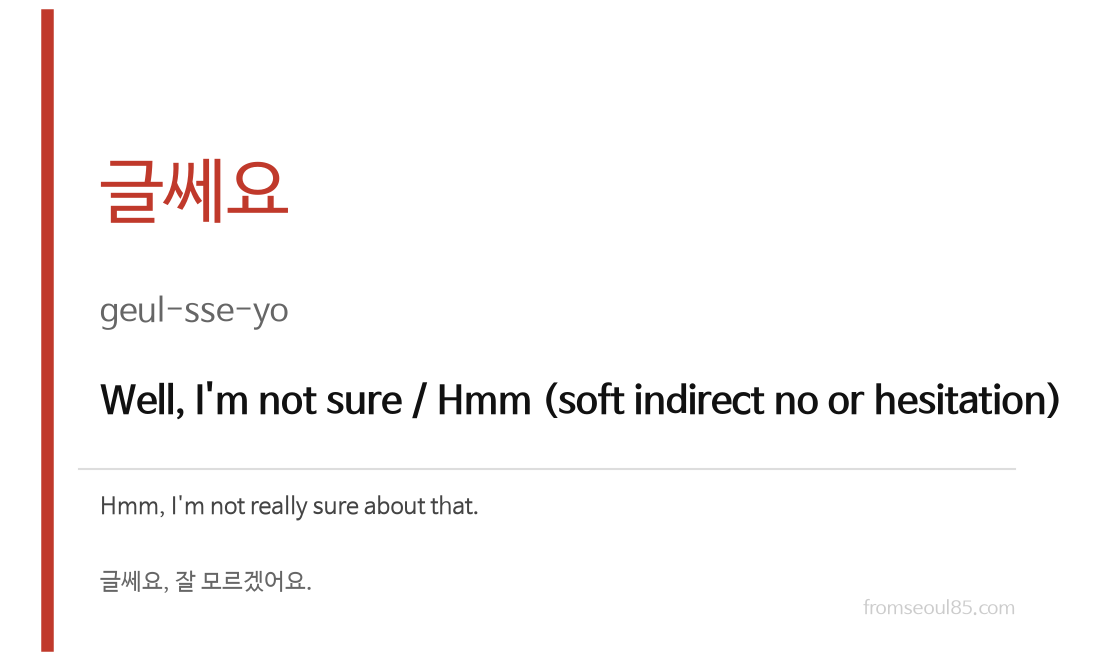
Sometimes Koreans avoid saying no directly. You might hear 글쎄요 (geul-sse-yo — well, I’m not sure). This is a soft way to express hesitation. It does not mean yes. It means: I am not sure about this.
Then there is 음… (eum — hmm). That is the sound of someone still searching for the words. It often means: I know the answer is no, but I am not sure how to say it. The pause itself is the message.
This depends on the relationship and the situation. In some cases, a direct 아니요 is perfectly fine. This is my personal experience. Other Koreans may see it differently.
How to Think About It
Here is the simplest way to think about 네 and 아니요. Ask yourself: is the other person’s statement correct? If yes, say 네. If no, say 아니요. Stop thinking about agreeing or disagreeing. Just decide if their words are accurate.
The words themselves are simple. The culture around them takes more time. Start with 네 and 아니요. Then pay attention to 응, 어, 글쎄요, and the pauses. Real Korean conversation lives in those small details.
Written by a native Korean speaker born in Seoul in 1985. This is my personal experience. Other Koreans may see things differently.
Key Expressions
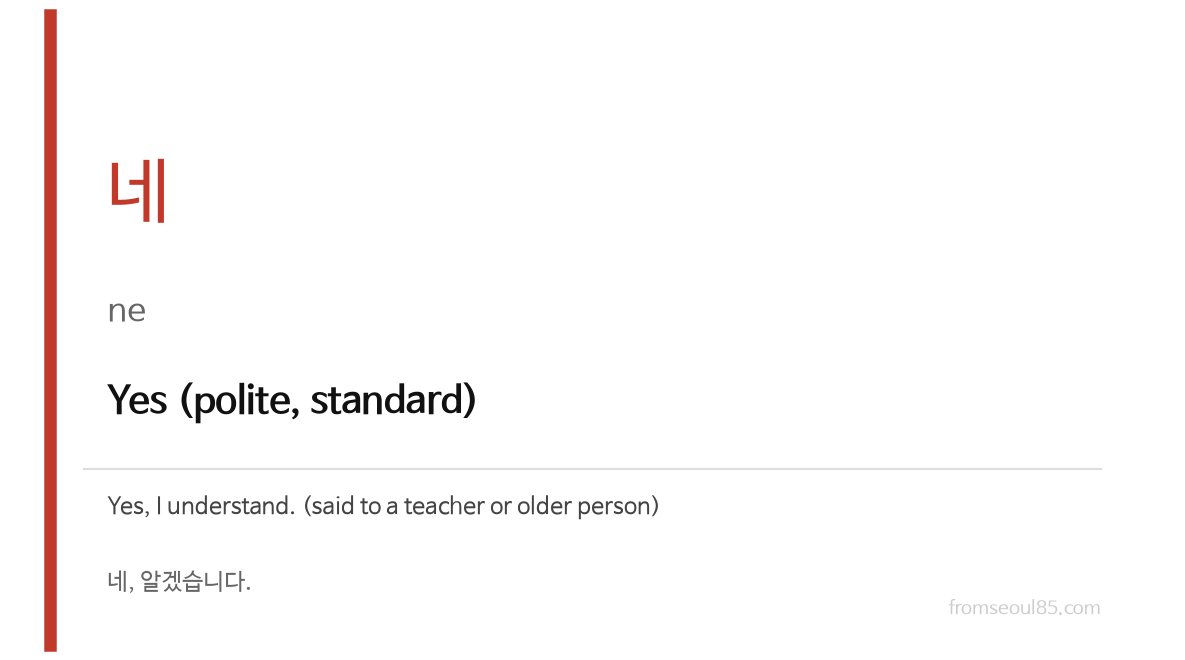
네 (ne — Yes (polite, standard))
Yes, I understand. (said to a teacher or older person)
네, 알겠습니다.
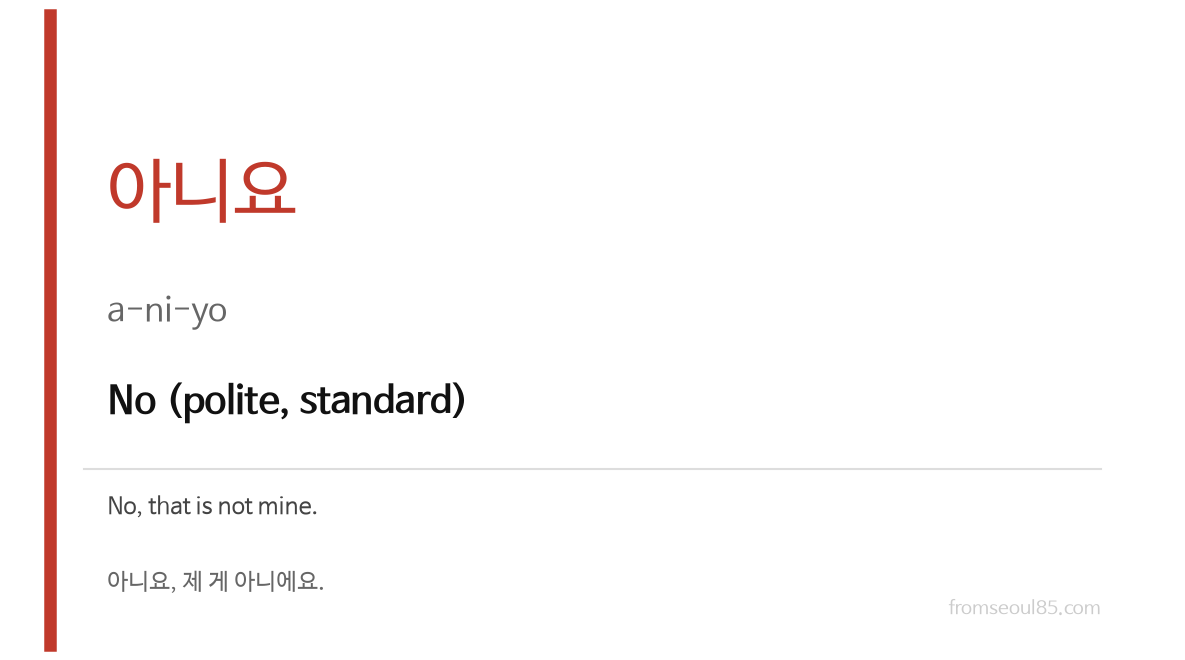
아니요 (a-ni-yo — No (polite, standard))
No, that is not mine.
아니요, 제 게 아니에요.
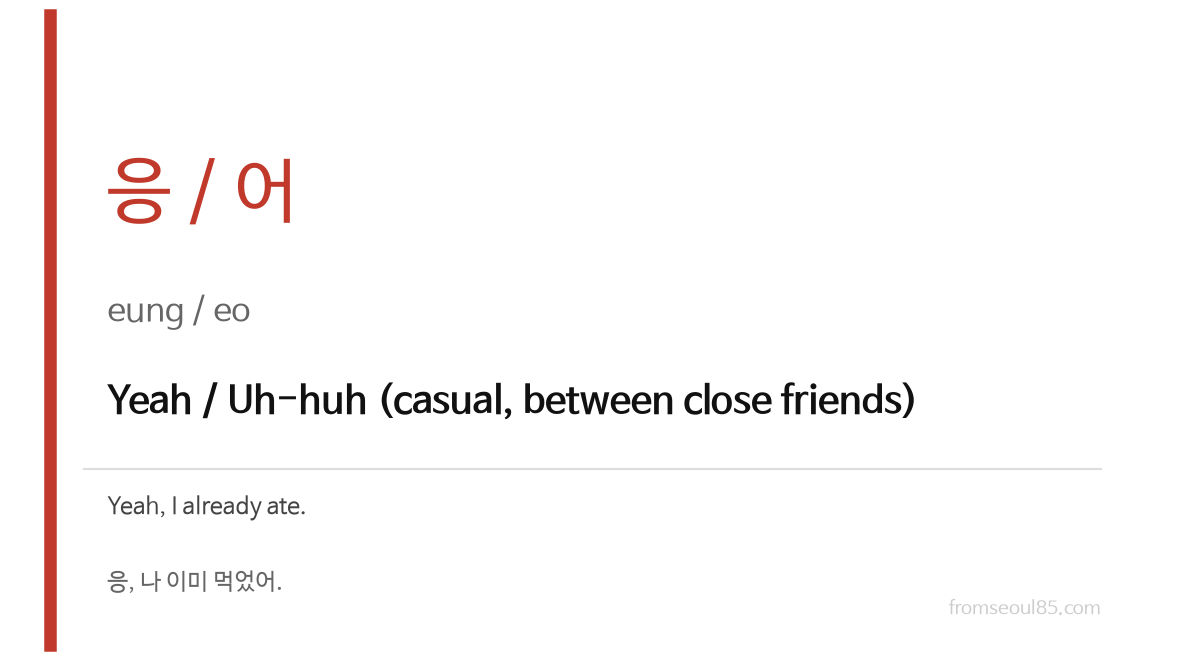
응 / 어 (eung / eo — Yeah / Uh-huh (casual, between close friends))
Yeah, I already ate.
응, 나 이미 먹었어.
글쎄요 (geul-sse-yo — Well, I’m not sure (soft hesitation or indirect no))
Hmm, I’m not really sure about that.
글쎄요, 잘 모르겠어요.
예 (ye — Yes (same meaning as 네, used interchangeably today))
Yes, I will be there. (in a formal setting)
예, 가겠습니다.